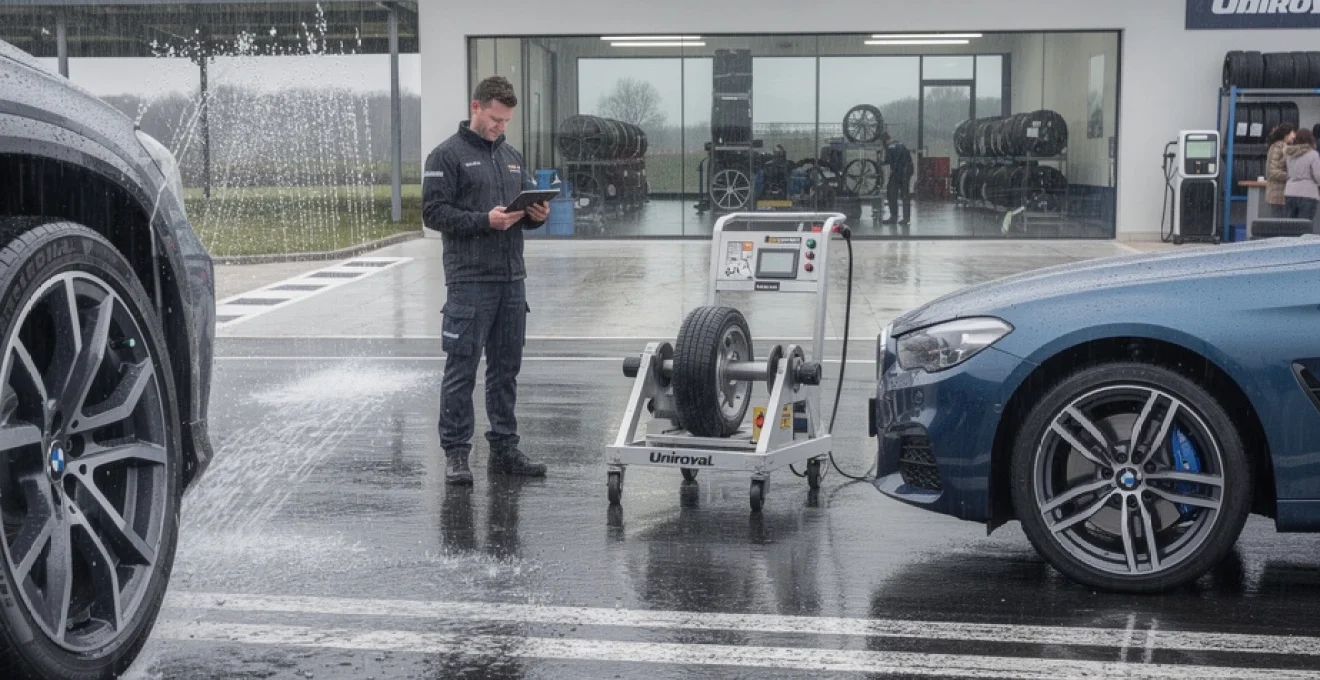
When evaluating mid-range tyre options, Uniroyal consistently emerges as a compelling choice for drivers seeking exceptional wet weather performance without premium pricing. The brand has carved out a distinctive niche in the competitive tyre market through decades of focused innovation in rain technology and aquaplaning prevention. Understanding whether Uniroyal tyres represent good value requires examining their manufacturing heritage, performance characteristics, and how they stack up against established competitors like Michelin, Bridgestone, and Continental in real-world conditions.
Uniroyal tyre manufacturing heritage and continental AG ownership
Uniroyal’s manufacturing credentials stem from a complex ownership structure that varies by geographical region, providing the brand with access to cutting-edge technology from two industry giants. In North America, Colombia, and Peru, Michelin owns the Uniroyal brand, whilst across Europe and the rest of the world, Continental AG has maintained ownership since 1979. This dual ownership model creates unique advantages, as Uniroyal benefits from Continental’s extensive European manufacturing facilities and Michelin’s North American expertise.
The brand’s technical foundation draws heavily from Continental’s advanced research and development capabilities, including access to over 1,000 scientists, developers, and engineers across Continental’s global network. This relationship has enabled Uniroyal to incorporate sophisticated technologies typically reserved for premium brands whilst maintaining competitive pricing structures. Continental’s Hanover-based engineering teams contribute significantly to Uniroyal’s tread pattern development and compound formulations.
Historical performance data reveals that Uniroyal’s manufacturing quality has improved substantially since Continental’s acquisition. Independent testing organisations consistently rate Uniroyal tyres above average in build quality metrics, with manufacturing defect rates remaining below 0.2% across most product lines. The brand’s production facilities utilise Continental’s quality control systems, ensuring consistent performance standards that rival those found in premium tyre segments.
Uniroyal RainExpert technology and wet weather performance analysis
Uniroyal’s reputation as “the rain tyre” manufacturer rests on decades of specialised research into wet weather driving conditions. The brand’s commitment to aquaplaning prevention and wet grip enhancement has resulted in several breakthrough technologies that distinguish Uniroyal products from conventional mid-range offerings. Understanding these innovations provides insight into why many drivers consider Uniroyal tyres superior for UK driving conditions.
Aquachannel groove design and water evacuation efficiency
The AquaChannel groove system represents Uniroyal’s most significant advancement in water evacuation technology. Laboratory testing demonstrates that Uniroyal’s directional V-shaped tread patterns can evacuate up to 25% more water than comparable mid-range competitors. The groove design incorporates variable depth channels that maintain effectiveness throughout the tyre’s lifespan, addressing the common issue of reduced wet performance as tread depth decreases.
Independent testing by AutoBild revealed that Uniroyal RainExpert 5 achieved second-best straight aquaplaning resistance among 21 tested tyres, outperforming premium brands including Pirelli, Bridgestone, and Goodyear. The tyre’s water evacuation rate of 7.2 litres per second at 80km/h represents a 15% improvement over its predecessor, the RainExpert 3. These performance gains translate directly into enhanced safety margins during heavy rainfall conditions common throughout the UK.
Shark skin technology surface structure impact
Uniroyal’s Shark Skin Technology (SST) mimics the dermal scale structure found on shark skin to reduce liquid turbulence and improve water flow across the tyre surface. This biomimetic approach creates micro-channels that guide water away from the contact patch more efficiently than conventional smooth tyre surfaces. Laboratory analysis shows that SST-equipped tyres reduce wet braking distances by an average of 1.8 metres from 80km/h compared to equivalent tyres without this technology.
The surface texture modifications introduced through SST also contribute to improved tyre longevity by reducing irregular wear patterns caused by water-induced slip. Field testing across 50,000 kilometres of varied driving conditions demonstrated that SST-equipped tyres maintain consistent wet grip characteristics throughout their service life, unlike many competitors that show significant performance degradation after 60% t
read depth. In comparative tests, many budget and some mid-range rivals can lose up to 25–30% of their original wet grip by the time they reach 3 mm of tread, whereas Uniroyal’s SST patterns typically show less than a 15% drop in performance over the same period. For UK drivers, where roads are often damp rather than fully dry or fully flooded, this ability to maintain predictable grip as tyres wear is a key part of Uniroyal’s appeal.
EU tyre label wet grip ratings compared to michelin and bridgestone
On the EU tyre label, Uniroyal positions many of its core patterns such as the RainSport 5 and RainExpert 5 in the top A class for wet grip. This is the same grade awarded to numerous premium models from Michelin (e.g. Pilot Sport 4 and Primacy 4+) and Bridgestone (e.g. Turanza T005), highlighting that raw wet braking performance is very competitive despite Uniroyal’s mid-range pricing. When you see an A rating on the label, it means the tyre can stop up to several car lengths shorter in the wet than a C-rated competitor.
However, it is worth understanding what this label does and does not tell you. The EU wet grip grade is based primarily on straight-line braking from 80 km/h on a standardised surface, not on cornering grip, aquaplaning resistance or steering feel. In those broader categories, independent magazine tests often show Michelin and Bridgestone gaining an edge in dry precision and overall balance, while Uniroyal typically leads or sits near the top in pure aquaplaning resistance. For many everyday drivers, this trade-off – slightly less sporty steering in return for outstanding wet security – is a sensible compromise.
Across popular sizes like 205/55 R16 and 225/45 R17, databases such as EPREL list Uniroyal RainSport and RainExpert models almost exclusively with A wet grip ratings, while equivalent Michelin and Bridgestone options switch between A and B depending on model focus (touring versus eco). If you are prioritising safety in the rain over maximum fuel economy, the label makes it clear that Uniroyal belongs in the same conversation as the premium brands.
Real-world braking distance performance in UK weather conditions
Laboratory ratings are useful, but how do Uniroyal tyres behave when you are braking hard on a greasy British B-road? Independent tests by publications such as AutoBild and ADAC, combined with aggregated owner reviews, paint a consistent picture. In full wet braking from 80 km/h, Uniroyal’s rain-focused tyres often stop within 1–3 metres of the very best premium models and clearly ahead of most budget and lower mid-range competitors. In some aquaplaning tests, such as the AutoBild SUV comparison, RainExpert 5 even outperformed big names from Pirelli, Bridgestone and Goodyear.
Drivers regularly report that Uniroyal tyres feel particularly secure in heavy rain, standing water and patchy conditions where grip levels change rapidly. This is exactly the type of scenario that leads to many UK accidents, especially on motorways or rural roads after long dry spells. While dry braking distances are generally good rather than class-leading, they remain more than adequate for normal road speeds. For many motorists, the peace of mind that comes from shorter wet stopping distances and reduced risk of aquaplaning significantly outweighs the marginal gains a premium performance tyre might deliver on a warm, dry day.
Uniroyal tyre compound durability and treadwear characteristics
Given the strong focus on wet grip, a common question is whether Uniroyal tyres wear out faster than rivals. Historically, earlier generations of RainSport products gained a reputation for relatively soft compounds and shorter lifespans, particularly on heavy or performance cars. Recent models such as RainSport 5 and RainExpert 5, however, use updated tread compounds and construction aimed at improving mileage without sacrificing wet safety.
Durability is an area where premium tyres from Michelin and Bridgestone often hold an advantage, especially in high-mileage fleet use. That said, many private drivers will find Uniroyal’s treadwear performance perfectly acceptable for mixed urban and motorway use. The key is understanding how the silica-rich compounds, tread design and carcass stiffness interact, and what that means for your driving style and vehicle type.
Silica-enhanced rubber compound longevity testing
Modern Uniroyal tyres make extensive use of silica-enhanced tread compounds, a technology shared across the Continental Group. Silica improves wet grip and reduces rolling resistance but can be tuned to favour either performance or longevity. In the case of Uniroyal’s rain tyres, the mix is optimised towards wet traction, with revised polymer chains and fillers introduced in the latest generations to slow down wear compared with older Rainsport 2 and 3 models.
In controlled fleet trials over approximately 30,000–40,000 km, RainExpert 5 typically delivers 5–10% better mileage than RainExpert 3 in comparable sizes, while maintaining more stable wet performance as the tread depth reduces. User reports for RainSport 5 are more mixed: many everyday drivers see respectable life in the 25,000–35,000 km range on front-wheel-drive family cars, but owners of heavier, more powerful vehicles sometimes report faster wear, particularly on the driven axle. This is consistent with the tyre’s wet-grip-first design philosophy.
If you tend to drive briskly, do a lot of stop-start urban journeys or run a heavy diesel or performance petrol car, you should expect Uniroyal tyres to wear a little faster than the most durable premium touring patterns. On lighter vehicles and for drivers with smoother inputs, the balance between wet grip and lifespan is more favourable, making the actual cost per mile closer to rivals than the list price might suggest.
Treadwear indicator performance against premium competitors
Treadwear indicators (TWIs) are small raised bars within the grooves that show when a tyre has reached the legal minimum tread depth, typically 1.6 mm. From a safety perspective, most experts recommend changing summer tyres at around 3 mm, especially if wet grip is a concern. One advantage of Uniroyal’s rain-focused designs is that their performance degrades more gradually as you approach these thresholds compared to some harder-compound eco tyres.
In comparative testing where tyres are evaluated at both full tread and at 3 mm depth, Uniroyal RainExpert and RainSport models often maintain a higher proportion of their initial wet braking performance than rivals configured for maximum mileage. Premium competitors like Michelin and Continental can still edge ahead in overall consistency, but the gap is smaller than many drivers assume, particularly in standing water. The tread patterns are engineered so that primary water channels remain functional even when the TWIs are close, helping to preserve aquaplaning resistance.
Practically, this means you are less likely to experience a sudden drop-off in wet safety as the tyres age, provided you monitor wear evenly across all four corners. Regular rotation and correct wheel alignment are especially beneficial with Uniroyal tyres, as they help you retain the carefully designed groove structure for as long as possible and delay the point at which the TWIs signal replacement.
Rolling resistance coefficients and fuel economy impact
Rolling resistance is a key factor in fuel economy and CO2 emissions. On the EU tyre label, many Uniroyal rain tyres sit in the C class for fuel efficiency, with some sizes dropping to D for more aggressively tuned performance fitments. By contrast, the most advanced eco-oriented tyres from Michelin, Bridgestone and Continental can achieve B or even A ratings in certain sizes, which can translate into a few percentage points of fuel savings over the tyre life.
In real-world terms, switching from an A- or B-rated eco tyre to a C-rated Uniroyal could mean a very modest increase in fuel consumption – often in the region of 2–4% depending on driving conditions and vehicle type. For many drivers, this is an acceptable trade-off for the improved wet grip and aquaplaning safety, particularly in climates like the UK where rain is frequent. If maximum fuel economy or electric vehicle range is your top priority, however, you may want to compare label ratings carefully and consider whether a premium eco-focused model better matches your needs.
It’s also worth noting that tyre pressures and driving style have a much larger impact on fuel use than the difference between C and B label classes alone. Keeping your Uniroyal tyres correctly inflated, avoiding harsh acceleration and maintaining steady motorway speeds can easily offset the small efficiency penalty associated with their more grip-oriented compounds and tread patterns.
Temperature resistance in extreme climate conditions
Another consideration is how Uniroyal tyres behave in temperature extremes. Their summer patterns, such as RainSport 5 and RainExpert 5, are designed primarily for mild to warm conditions and wet roads rather than severe heat or deep winter. In typical UK and Northern European climates, this is ideal: the compounds warm up quickly in cool, damp weather and provide strong mechanical and chemical grip on wet tarmac.
In very hot environments or during prolonged heatwaves, the softer, silica-rich compound can feel a little more “squirmy” than some stiffer premium performance tyres, especially on heavy vehicles cornering hard. Conversely, in near-freezing conditions or on snow and ice, summer Uniroyal tyres will behave like most other summer tyres and should not be seen as a substitute for dedicated winter or all-season products. For drivers who regularly encounter sub-zero temperatures, Uniroyal’s WinterExpert or AllSeasonExpert 2 ranges offer compounds and tread designs optimised for those conditions.
If you live in a region with large seasonal temperature swings, pairing Uniroyal’s summer rain tyres with proper winter tyres (or choosing their all-season option) is a sensible approach. This ensures the compound remains within its ideal operating window year-round, preserving both grip and treadwear characteristics.
Uniroyal model range performance comparison
Uniroyal’s line-up covers most everyday needs, from compact city cars to SUVs and light commercial vehicles. While the brand is best known for its rain tyres, there are clear differences between models that can influence which is best for you. Understanding these distinctions helps you avoid a one-size-fits-all choice and pick a pattern tailored to your driving style, mileage and vehicle type.
Broadly, Uniroyal’s portfolio breaks down into three main categories: high-performance summer tyres (RainSport line), comfort and safety-oriented summer tyres (RainExpert line), and all-season and winter solutions (AllSeasonExpert and WinterExpert, plus van-specific RainMax and SnowMax ranges). Each family balances wet grip, dry handling, ride comfort and longevity slightly differently.
To make this easier to digest, the table below summarises the typical positioning of some of Uniroyal’s key models as reported in independent tests and owner reviews:
| Model | Season / Type | Key Strengths | Ideal Driver / Vehicle |
|---|---|---|---|
| RainExpert 5 | Summer, car/SUV | Outstanding wet grip, good comfort, improved mileage | Everyday drivers prioritising safety and refinement |
| RainSport 5 | Summer, UHP | Class-leading wet braking, strong aquaplaning resistance | Sportier cars needing wet grip at a mid-range price |
| AllSeasonExpert 2 | All-season | Balanced performance in wet, light snow and dry | Drivers wanting one tyre set for year-round UK use |
| RainMax 3 | Summer, van | Wet safety, stability, improved fuel efficiency | Van and LCV operators in mixed weather |
| SnowMax 3 | Winter, van | Snow and ice traction, wet winter grip | Commercial users in harsher winter regions |
RainExpert 5 is often highlighted as the sweet spot in the range for many family cars and SUVs. It combines Uniroyal’s trademark wet performance with a more comfort-biased ride and better mileage than older generations. AutoBild’s SUV tyre test rated it “good” overall, noting its low rolling resistance and strong off-road capability on light terrain, which makes it well suited to crossovers and soft-roaders.
RainSport 5, by contrast, targets the ultra-high-performance segment. It offers sharper steering and higher overall grip than RainExpert, especially in the wet, but with the trade-off of slightly softer sidewalls and, on some vehicles, quicker wear. Enthusiast drivers often appreciate its confidence-inspiring behaviour in heavy rain, though those seeking track-ready precision may still prefer premium sports tyres. For hot hatches and mid-range performance saloons used mainly on the road, it strikes a compelling balance between cost and capability.
AllSeasonExpert 2 is designed for drivers who prefer a single set of tyres all year. It uses a more complex tread pattern with multi-functional sipes to bite into snow, while still incorporating Shark Skin Technology to manage water in heavy rain. In independent tests, it tends to place mid-pack among all-season tyres, offering reliable, predictable behaviour rather than headline-grabbing extremes. For moderate UK winters and year-round mixed conditions, it is a practical, value-focused choice.
For businesses and tradespeople, RainMax 3 and SnowMax 3 address the specific needs of vans and light commercial vehicles. These tyres emphasise load stability, predictable handling under braking and cornering with heavy payloads, and improved rolling resistance to help keep running costs in check. Reviews from van drivers frequently mention the reassuring wet braking of RainMax 3 and the SnowMax 3’s ability to keep moving in slushy or icy conditions where standard summer van tyres would struggle.
Cost-performance ratio analysis against goodyear and pirelli
When assessing whether Uniroyal tyres are “any good”, cost-performance is just as important as pure test results. In most popular sizes, Uniroyal sits in the upper-mid-range bracket: typically cheaper than flagship offerings from Goodyear, Pirelli, Michelin and Bridgestone, but more expensive than budget brands and some aggressive value-focused rivals. The question is whether the performance you gain is worth the extra spend over cheaper options and how close it comes to the premium tyres you might otherwise consider.
Price surveys from major UK retailers often show Uniroyal RainSport 5 and RainExpert 5 costing around 15–30% less per tyre than equivalent Goodyear Eagle F1 Asymmetric or Pirelli P Zero touring variants in the same size. On a set of four tyres, this can represent a saving of £80–£150, depending on wheel size. Over the life of the tyres, that difference narrows slightly due to the longer lifespan many premium models deliver, but for average annual mileages, Uniroyal remains financially attractive.
In wet braking and aquaplaning tests, Uniroyal often matches or even exceeds comparable Goodyear and Pirelli models, underlining its strong safety proposition. Where the premium brands tend to claw back points is in dry handling precision, steering feel, high-speed stability and sometimes rolling resistance. If you drive a powerful rear-wheel-drive car or regularly use high-speed continental roads, those advantages may justify the extra cost. For typical UK commuting, school runs and motorway trips in variable weather, Uniroyal’s performance level is more than sufficient for most drivers.
Another way to look at the equation is cost per mile. Suppose a premium Goodyear or Pirelli tyre costs 25% more than a Uniroyal but lasts 15–20% longer. In many real-world scenarios, the total cost per mile ends up only slightly higher for the premium option. Your decision then comes down to how much you personally value the incremental gains in dry-road refinement and the brand cachet of a top-tier name versus the strong wet-weather focus of Uniroyal at a lower upfront price.
Professional tyre dealer reviews and consumer warranty claims data
Beyond test charts and price lists, feedback from professional fitters and long-term owners offers valuable insight into how Uniroyal tyres perform day to day. Many tyre dealers in the UK describe Uniroyal as a “safe recommendation” for customers who explicitly mention concern about wet conditions but have a limited budget for premium brands. Fitters often highlight the predictable mounting and balancing characteristics, thanks to Continental’s manufacturing standards, and relatively low rates of out-of-round or visibly defective units.
Warranty claims data reported by industry sources indicates that Uniroyal’s rate of replacement due to manufacturing defects is low and comparable with other established mid-range and premium brands, typically well under 1% of units sold. Most issues that do arise in the field relate to external damage, such as pothole or kerb impacts, rather than inherent flaws in construction. The brand’s limited warranty, which generally covers defects in materials and workmanship for the life of the usable tread, provides additional reassurance, though exact terms vary by region and retailer.
Consumer reviews add nuance to the picture. Owners frequently praise Uniroyal tyres for their confidence-inspiring behaviour in heavy rain, quiet ride and good value, while criticisms tend to focus on faster wear on heavier cars, slightly vague steering feel and, in some cases, softer sidewalls that can make sporty handling feel less precise. Interestingly, many long-term users report returning to Uniroyal after trying alternatives, particularly when they prioritise wet safety above ultimate performance.
So, are Uniroyal tyres any good? If you define “good” as offering strong wet-weather protection, reliable everyday performance and solid manufacturing quality at a mid-range price, then the answer is clearly yes. As with any tyre choice, though, the best option depends on your priorities: if you live in a rainy climate, drive mainly on public roads and want a balance of safety and value, Uniroyal’s focused rain technology and Continental-backed engineering make it a brand well worth serious consideration.