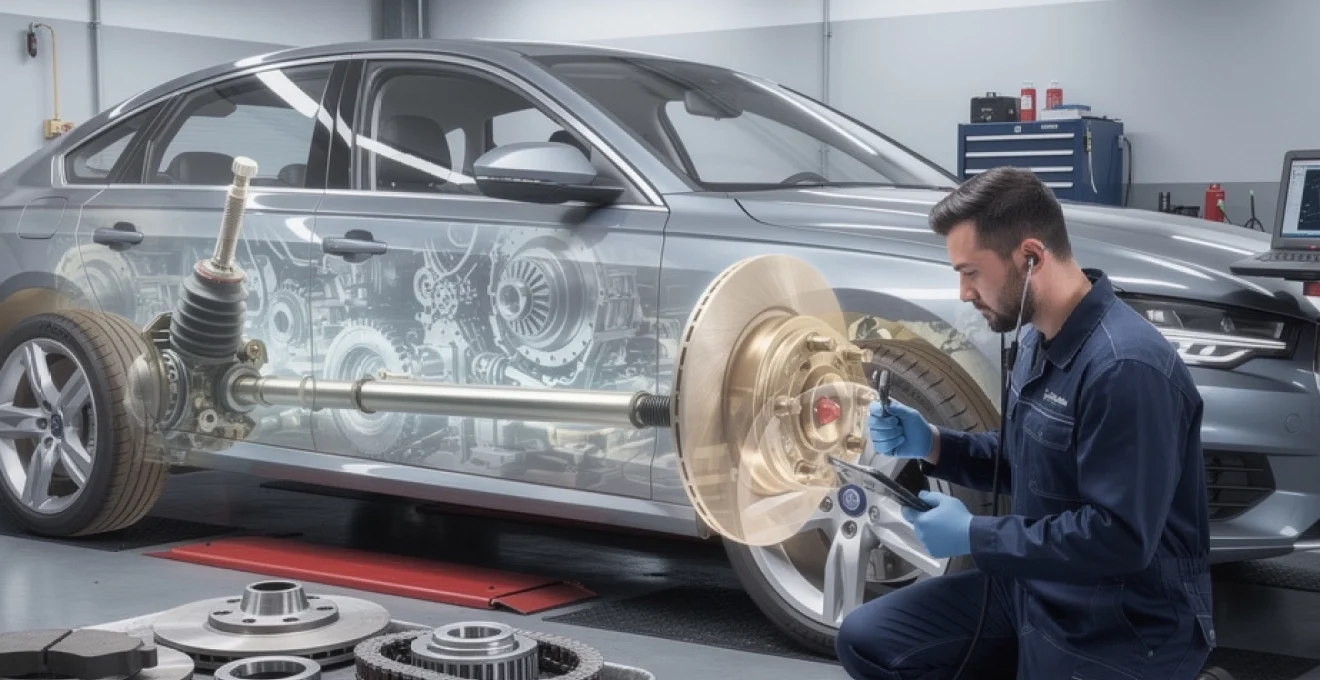
The distinctive sound of metal grinding against metal during acceleration can transform a peaceful drive into a nerve-wracking experience. This mechanical symphony of distress often signals significant underlying issues within your vehicle’s complex systems, ranging from relatively minor component wear to potentially catastrophic drivetrain failures. Understanding the various sources of grinding noises becomes crucial for vehicle owners who want to maintain their cars properly and avoid costly emergency repairs.
Modern vehicles contain numerous rotating components, each capable of producing grinding sounds when they begin to fail. The challenge lies in accurately identifying the source of these noises, as similar sounds can originate from completely different mechanical systems. Early detection and proper diagnosis of grinding noises can mean the difference between a straightforward component replacement and an expensive system rebuild.
Common mechanical sources of grinding noise during acceleration
Vehicle grinding noises during acceleration typically stem from worn mechanical components that have exceeded their service life or suffered damage due to inadequate maintenance. These sounds often intensify under load, making acceleration the prime time for their manifestation. The mechanical stress placed on various systems during acceleration amplifies existing wear patterns and brings attention to components that might otherwise operate quietly during idle or cruise conditions.
Worn CV joint universal components and boot deterioration
Constant velocity joints represent one of the most common sources of grinding noises during acceleration, particularly in front-wheel-drive vehicles. These intricate mechanical assemblies transfer power from the transmission to the wheels while accommodating the steering angle and suspension movement. When CV joint bearings begin to wear or the protective boot tears, allowing contamination to enter the joint, the resulting metal-on-metal contact produces a characteristic grinding sound that intensifies during acceleration and turning manoeuvres.
The deterioration process typically begins with boot failure, which allows moisture and debris to contaminate the carefully engineered bearing surfaces within the joint. Environmental factors such as road salt and off-road driving accelerate this degradation process, leading to premature joint failure. Vehicle owners often notice the grinding becomes more pronounced during tight turns at low speeds, such as navigating car parks or roundabouts.
Brake pad metal backing plate contact with disc rotors
Severely worn brake pads can produce grinding noises that become apparent during acceleration, particularly when the vehicle’s momentum causes slight brake drag or when the driver applies minimal brake pressure while accelerating. When brake pad friction material wears completely away, the metal backing plate contacts the brake rotor directly, creating a harsh grinding sound that can occur intermittently during various driving conditions.
This metal-to-metal contact not only produces alarming noises but also causes rapid rotor damage that significantly increases repair costs. The grinding may seem to originate from the drivetrain during acceleration because the sound resonates through the vehicle’s structure. Immediate attention becomes essential when brake-related grinding occurs, as continued operation compromises both vehicle safety and component integrity.
Differential ring and pinion gear wear patterns
The differential assembly in rear-wheel-drive and all-wheel-drive vehicles contains precision-machined ring and pinion gears that can develop wear patterns leading to grinding noises during acceleration. These components operate under tremendous stress, transferring engine torque to the wheels while allowing for speed differences during cornering. When gear teeth begin to pit or chip, the resulting irregular contact surfaces produce grinding sounds that intensify under load.
Differential grinding typically becomes most noticeable during moderate to heavy acceleration, as the increased torque load amplifies the noise from damaged gear surfaces. The sound often varies with vehicle speed and load conditions, distinguishing it from other potential noise sources. Poor maintenance practices, such as infrequent differential oil changes, contribute significantly to premature gear wear and subsequent noise development.
Transmission input shaft bearing degradation
The transmission input shaft bearing supports the primary shaft that receives power from the engine’s flywheel or torque converter. When this critical bearing begins to fail, it produces a grinding noise that becomes particularly evident during acceleration when torque loads increase. The bearing degradation process typically results from normal wear, inadequate lubrication, or contamination within the transmission system.
Input shaft bearing noise often presents as a consistent grinding sound that varies with engine speed rather than vehicle
speed. Drivers may also notice that the grinding noise lessens or disappears when coasting or with the clutch depressed in a manual transmission. Because the input shaft bearing is buried deep inside the gearbox, accurate diagnosis often requires professional inspection using a mechanic’s stethoscope and, in many cases, removal and disassembly of the transmission. Ignoring early grinding noises from the transmission input shaft bearing can ultimately lead to complete gearbox failure, making prompt attention essential.
Engine-related grinding sound diagnostics and component analysis
Not all grinding noises during acceleration come from the drivetrain; many originate directly from the engine and its ancillary systems. As engine speed rises under load, rotating components are subjected to higher forces and any weakness, misalignment, or lack of lubrication can manifest as a grinding or growling sound. Distinguishing engine-related grinding from transmission or wheel-end noise requires careful listening, attention to when the noise appears, and sometimes systematic component isolation.
When you hear a grinding noise that follows engine RPM rather than vehicle speed, you are often dealing with an engine-driven accessory or an internal timing component. These problems can escalate quickly because critical systems like cooling, charging, and valve timing depend on these parts. Understanding the common engine-related causes of grinding when accelerating will help you decide whether it is safe to drive to a workshop or whether you should stop the vehicle to prevent serious engine damage.
Timing chain tensioner failure and guide rail wear
In engines that use timing chains rather than timing belts, the chain rides over plastic or metal guide rails and is kept tight by a hydraulic or mechanical tensioner. Over time, these guide rails can wear, crack, or break, and tensioners can lose pressure or seize. When this happens, the chain can slap against the guides and sprockets, creating a harsh grinding or rattling noise that is most noticeable during acceleration, cold starts, or sudden throttle changes.
A failing timing chain system often produces a noise from the front or side of the engine that increases in intensity with RPM. You might notice a brief rattle at startup that gradually becomes a continuous grinding sound as wear progresses. Left unchecked, excessive slack in the chain can cause it to jump teeth, throwing off camshaft timing and potentially leading to valve-to-piston contact in interference engines. Addressing timing chain tensioner and guide rail issues early is far less expensive than rebuilding an engine after catastrophic failure.
Accessory belt pulley bearing seizure symptoms
The serpentine or accessory belt drives several components, including the alternator, power steering pump, air-conditioning compressor, and sometimes the water pump. Each of these accessories contains bearings that allow pulleys to spin freely. As these bearings wear out, they can begin to grind, growl, or squeal, particularly under the extra load of acceleration. A failing idler or tensioner pulley bearing is a very common cause of grinding noises that seem to come from the front of the engine bay.
One simple way to narrow down an accessory-related grinding noise is to briefly remove the accessory belt (with the engine off and cool) and then run the engine for a few seconds. If the grinding disappears, you have confirmed that the source is one of the belt-driven components or their pulleys. You can then spin each pulley by hand, feeling for roughness or play. Any pulley that feels gritty, wobbly, or stiff is a prime suspect and should be replaced before it seizes, throws the belt, or damages other components.
Water pump impeller shaft bearing deterioration
The water pump is critical for engine cooling and is usually driven by the accessory belt or timing belt/chain. Inside the pump, a shaft connects the pulley to the impeller, and this shaft runs on bearings that are constantly exposed to load and temperature extremes. As these bearings deteriorate, they can produce a grinding or rumbling noise that often varies directly with engine speed and may get worse when the engine is hot.
Signs of a failing water pump bearing include coolant seepage from a weep hole, excessive play in the pulley when moved by hand, and a pronounced grinding sound from the front of the engine. Because a seized water pump can cause immediate overheating and severe engine damage, you should treat any grinding noise linked to the cooling system as urgent. Replacing a worn water pump at the first sign of trouble is far cheaper than repairing a warped cylinder head or blown head gasket caused by overheating.
Alternator rotor bearing assembly malfunction
The alternator’s rotor spins at high speed on a pair of internal bearings, generating electricity for the vehicle’s electrical system and charging the battery. As these bearings wear, they can create a distinct grinding, growling, or whirring noise that increases with RPM and sometimes changes when electrical load is applied. You may notice that the grinding noise is accompanied by dimming headlights, battery warning lights, or difficulty starting the car.
Because the alternator is usually mounted at the front of the engine and driven by the serpentine belt, its grinding noise can be mistaken for other accessory problems. A mechanic’s stethoscope or even a long screwdriver held to the alternator housing (with appropriate caution) can help you localize the sound. Once alternator bearing failure has been confirmed, the typical remedy is alternator replacement or professional rebuilding. Continued driving with a failing alternator can lead not only to a sudden loss of charging but also to belt failure if the unit seizes, compounding the repair cost.
Drivetrain component failure patterns and identification methods
Beyond the engine and front-end accessories, the broader drivetrain—gearbox, propeller shaft, and differentials—provides several potential sources of grinding noise when accelerating. These components work together to transmit power from the engine to the wheels, and each has unique failure patterns that can be identified by when and how the noise occurs. Does the grinding appear only when changing gears, or is it continuous under load? Does it vary with road speed rather than engine RPM?
By asking these questions and performing some basic tests, you can narrow down the source of the grinding noise before visiting a workshop. Many drivetrain issues begin with subtle changes: a faint whine that turns into a grind, a slight vibration that grows with speed, or difficulty engaging specific gears. Recognizing these early patterns not only improves safety but also helps you prioritize repairs and avoid collateral damage to other drivetrain components.
Manual transmission synchroniser ring wear detection
In a manual transmission, synchroniser rings (often called synchros) match gear speeds during shifts to allow smooth engagement. Over time, these brass or composite rings wear down, losing their ability to synchronize the gears effectively. This can result in a grinding noise when shifting, especially when accelerating through lower gears. You might notice that second or third gear becomes particularly difficult to engage without a grind.
One simple test for worn synchroniser rings is to double-clutch during upshifts and downshifts. If the grinding noise is reduced or eliminated when you double-clutch, this strongly suggests synchroniser wear rather than a clutch or linkage problem. While some drivers live with mild synchro grind by adapting their shifting technique, progressive wear will only make the issue worse. Eventually, the only long-term solution is to rebuild or replace the transmission, focusing on the affected synchroniser assemblies and related components.
Automatic transmission torque converter lock-up clutch issues
In automatic transmissions, the torque converter includes a lock-up clutch designed to improve efficiency at cruising speeds. When the friction material on this clutch wears out or becomes contaminated, engagement can become harsh or erratic, sometimes producing a grinding, shuddering, or buzzing sensation during acceleration or at the point where the converter locks. This noise often feels like it is coming from underneath the front of the vehicle and may be accompanied by RPM fluctuations.
Diagnosing torque converter lock-up clutch issues typically requires a scan tool to monitor transmission data and lock-up operation. If you notice grinding noises or shuddering around specific speeds—often between 40 and 60 mph—try driving with the overdrive or lock-up function temporarily disabled (if your vehicle allows it). A reduction in symptoms under these conditions points toward the torque converter as the culprit. Addressing this type of grinding noise usually involves transmission fluid and filter service as a first step, followed by torque converter replacement or a full transmission overhaul if the issue persists.
Propeller shaft centre bearing mount deterioration
On vehicles with a two-piece driveshaft, a centre support bearing (or carrier bearing) holds the middle of the propeller shaft while a rubber mount isolates vibration. As the bearing or its rubber support deteriorates, you may hear a grinding, droning, or rumbling noise during acceleration, often accompanied by a vibration that changes with road speed. This noise tends to come from the middle of the vehicle, roughly beneath the front seats or rear floor.
Visual inspection can reveal a sagging centre support, torn rubber, or excessive play in the bearing. Driving the vehicle on a lift while a technician listens near the centre bearing is a common diagnostic method. Because a failed centre bearing can allow the prop shaft to move excessively, ignoring early grinding or rumbling noises can eventually lead to damage of the universal joints, transmission output shaft, or differential input flange. Replacement of the centre bearing and, if needed, rebalancing of the shaft usually resolves the noise and restores smooth acceleration.
Final drive axle bearing race pitting analysis
The final drive or differential contains axle bearings that support the rotating shafts leading to the wheels. Over time, these bearings can develop pitting on their races due to contamination, inadequate lubrication, or simple age-related fatigue. The result is a cyclic grinding or humming noise that increases with road speed and can become more pronounced when you accelerate or take long sweeping turns. Drivers often describe it as a “growl from the rear” that was faint at first and gradually grew louder.
To differentiate axle bearing noise from tyre or wheel bearing issues, technicians may perform a road test, weaving gently within the lane to load one side of the vehicle at a time. A change in grinding intensity when loading a particular side points toward that side’s axle bearing or hub assembly. In many modern vehicles, the axle bearing is integrated with the hub, requiring replacement of the entire unit. Addressing pitted axle bearings early prevents metal debris from contaminating the differential oil and damaging more expensive components like the ring and pinion gears.
Professional diagnostic tools and testing procedures
While basic listening and visual checks can help you narrow down a grinding noise when accelerating, many issues require professional diagnostic tools for accurate identification. Modern workshops rely on a combination of electronic equipment and traditional mechanical methods to pinpoint the source of vibrations and noises. This is especially important because replacing the wrong component based on guesswork can be costly and still leave the grinding noise unresolved.
One of the most valuable tools for noise diagnostics is the mechanic’s stethoscope or an electronic chassis ear system, which uses multiple wired or wireless microphones attached to different areas of the vehicle. By comparing the sound level at each location during a road test, technicians can identify whether the grinding originates from the engine, transmission, differential, wheel bearings, or another rotating assembly. In addition, scan tools, borescopes, and thermal imaging cameras can provide supporting evidence by revealing abnormal operating conditions or heat patterns associated with failing parts.
Workshops also use road test protocols and lift-based inspections to reproduce and isolate noises under controlled conditions. For example, running the vehicle on a chassis dynamometer or with the drive wheels raised can allow technicians to listen closely to drivetrain components without road noise interference. In some cases, vibration analyzers are employed to measure frequency and amplitude, helping distinguish between tyre-related issues, bearing problems, and gear mesh irregularities. The more precisely the grinding noise is located and characterized, the more targeted and cost-effective the repair plan becomes.
Repair cost analysis and component replacement priorities
Once the source of a grinding noise during acceleration has been identified, the next step is to decide what to repair and when. Not all grinding noises carry the same risk or urgency, and budget-conscious vehicle owners often need to prioritize. For example, a slightly noisy wheel bearing may allow for short-term driving, whereas a grinding timing chain or water pump could lead to sudden and catastrophic engine damage if ignored.
To help you think about priorities, it can be useful to group repairs into three categories: safety-critical, damage-preventing, and comfort-related. Safety-critical issues include grinding from brakes, severely worn wheel bearings, or drivetrain components that could fail and cause loss of control. Damage-preventing repairs address components like differentials, transmissions, and timing systems that, if left to grind, can generate metal debris and destroy adjacent parts. Finally, comfort-related noises might involve minor synchro wear or slight accessory bearing hums that, while annoying, do not pose an immediate threat.
| Component | Typical Grinding Cause | Relative Priority |
|---|---|---|
| Brake pads/rotors | Metal backing plate contact | Immediate (safety-critical) |
| Wheel or hub bearings | Race pitting/wear | High (safety/damage) |
| Timing chain system | Tensioner/guide failure | High (engine damage risk) |
| Differential gears | Ring/pinion wear | Medium–High (damage-preventing) |
| Accessory pulleys | Bearing wear | Medium (can escalate) |
When you receive an estimate that includes several recommended repairs, ask your technician which items must be addressed immediately and which can safely be scheduled later. A transparent shop will explain the potential consequences of delaying each repair, helping you make informed decisions. Remember that continuing to drive with a known grinding noise when accelerating often increases the total cost, as metal particles circulate through lubricants and cause secondary wear. In many cases, acting sooner—especially with lubricated components like transmissions and differentials—saves money in the long run.
Preventive maintenance schedules to avoid grinding noise recurrence
Preventing grinding noises from ever appearing is far better than dealing with them after the fact. Many of the issues discussed—worn bearings, damaged gears, failing tensioners—develop slowly over time and can be delayed or avoided through consistent preventive maintenance. Yet it is common for drivers to focus only on oil changes and neglect items like transmission fluid, differential oil, and accessory belt inspections, all of which play a major role in preventing grinding when accelerating.
So what practical steps can you take? First, follow or slightly exceed the manufacturer’s recommended service intervals for fluids, especially in vehicles that tow, operate in hot climates, or spend a lot of time in stop‑and‑go traffic. Regularly scheduled transmission and differential fluid changes remove metal particles and replenish critical additives, extending the life of bearings and gears. Second, have your brakes, wheel bearings, and suspension components inspected at least once a year—or every 10,000–15,000 miles—to catch early signs of wear before they turn into severe grinding noises.
It also helps to develop the habit of listening to your vehicle. If you notice a faint new sound, a slight vibration, or a change in how the car feels under acceleration, don’t dismiss it. Early intervention often turns a major repair into a minor adjustment or simple part replacement. Finally, keep records of all maintenance and repairs; this not only supports resale value but also helps technicians identify patterns, such as repeated bearing failures that may point to installation issues or alignment problems. By combining attentive driving with a proactive maintenance schedule, you dramatically reduce the likelihood of hearing that unsettling grinding noise when accelerating—and ensure your vehicle delivers smooth, reliable performance for years to come.