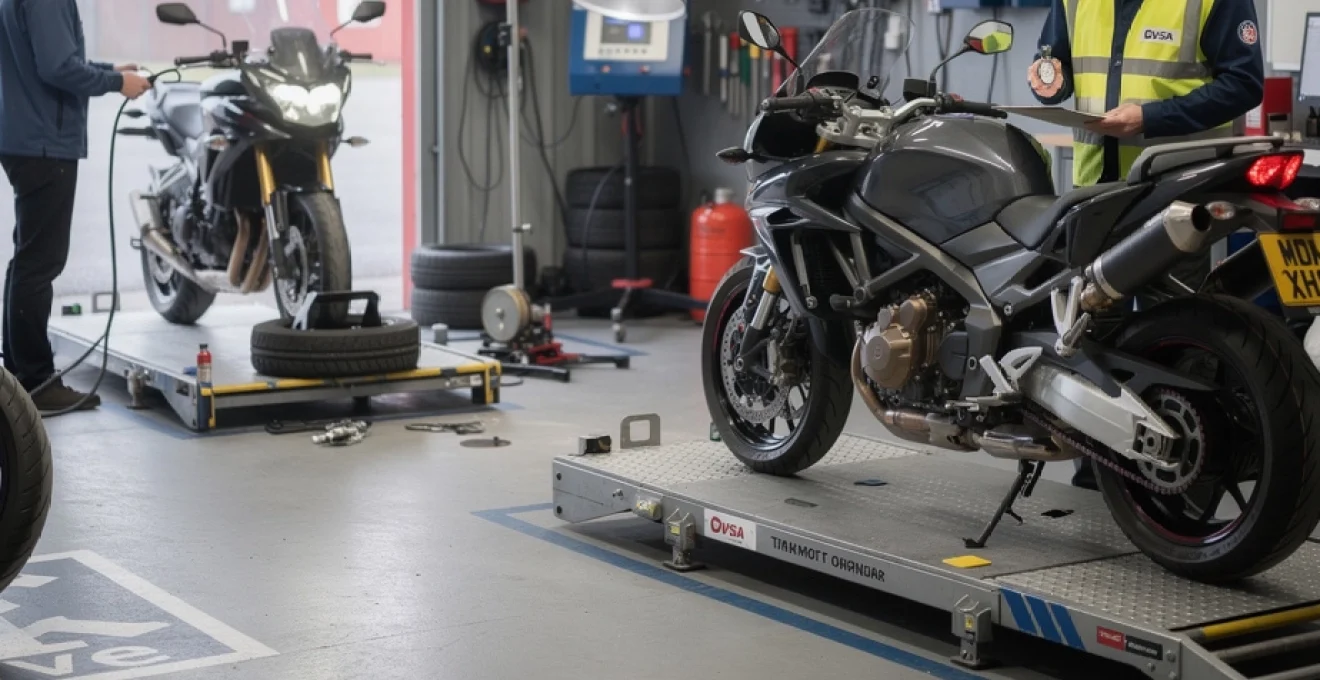
Motorcycle MOT testing remains a critical safety requirement for riders across the United Kingdom, with specific timing considerations that directly impact your ability to use public roads legally. Understanding the precise duration of motorcycle MOT examinations helps riders plan their schedules effectively whilst ensuring compliance with DVSA regulations. The testing process involves comprehensive safety checks that vary significantly depending on your motorcycle’s condition, preparation level, and the specific testing centre you choose.
Unlike car MOT tests, motorcycle examinations follow distinct protocols established by the Driver and Vehicle Standards Agency, with prescribed minimum testing periods designed to ensure thorough safety evaluations. These timing requirements have evolved considerably since the introduction of computerised MOT systems, establishing standardised procedures that protect both riders and other road users. The duration directly affects not only your personal schedule but also influences the overall cost-effectiveness of maintaining your motorcycle’s roadworthiness certification.
DVSA MOT testing duration standards for motorcycles
The Driver and Vehicle Standards Agency has established comprehensive timing protocols for motorcycle MOT testing that ensure consistent safety standards across all approved testing centres throughout the UK. These regulations mandate specific minimum testing durations that cannot be shortened, regardless of a motorcycle’s apparent condition or the tester’s efficiency. The prescribed testing timeframes serve as quality assurance mechanisms, preventing rushed examinations that could compromise rider safety on public roads.
DVSA guidelines specify that motorcycle MOT tests must adhere to standardised timing requirements based on extensive research into proper examination procedures. This research analysed thousands of motorcycle inspections to determine the minimum time necessary for thorough safety assessments. The resulting protocols ensure that every motorcycle receives adequate scrutiny during critical safety checks, regardless of whether obvious defects are immediately apparent to testing personnel.
Class 1 and class 2 motorcycle testing timeframes
Class 1 motorcycles, encompassing vehicles with engine capacities up to 200cc, require identical testing durations to their larger Class 2 counterparts despite their simpler mechanical configurations. This standardisation ensures comprehensive safety evaluations regardless of engine size, addressing the reality that smaller motorcycles often experience proportionally higher usage rates and may exhibit unexpected wear patterns. The uniform approach prevents discrimination between motorcycle categories whilst maintaining consistent safety standards.
Class 2 motorcycles, featuring engines exceeding 200cc, undergo the same systematic examination process with identical timing requirements. These larger capacity machines often incorporate more complex systems including advanced braking technologies, sophisticated suspension components, and enhanced electrical systems. However, the standardised testing duration accommodates these complexities without extending overall examination times, ensuring efficiency across all motorcycle categories.
DVSA prescribed maximum testing periods
The current DVSA mandate establishes a minimum testing duration of approximately 37 minutes for all motorcycle categories, representing a significant standardisation from previous variable timing approaches. This precise timing requirement emerged from comprehensive analysis of proper examination procedures, ensuring sufficient time for detailed safety assessments whilst preventing unnecessarily extended testing periods that could inconvenience riders.
Testing centres cannot legitimately complete motorcycle MOT examinations in significantly less time without potentially compromising safety standards or violating DVSA protocols. This timing requirement includes all necessary documentation procedures, computerised system updates, and the physical examination of critical safety components. The standardised approach ensures consistent service quality across different testing facilities throughout the UK.
MOT centre efficiency variations across UK regions
Regional variations in MOT centre efficiency can significantly impact your overall experience, though testing duration itself remains standardised across all approved facilities. Urban testing centres often process higher volumes of motorcycles, developing streamlined procedures that minimise waiting times whilst adhering to prescribed examination durations. These centres frequently invest in advanced equipment and staff training that enhances overall efficiency without compromising safety standards.
Rural MOT testing facilities may offer more personalised service with reduced waiting times, though some may have limited availability for motorcycle testing appointments. The efficiency differences primarily affect scheduling flexibility rather than actual testing duration, as all centres must comply with identical DVSA timing requirements. However, rural centres might provide additional benefits such as more convenient parking arrangements and less rushed customer service interactions.
Peak season testing delays during spring months
Spring months traditionally experience significantly increased demand for motorcycle MOT testing as riders prepare their machines for the upcoming riding season. This seasonal surge creates appointment scheduling challenges that can extend your overall visit duration, even
if the individual tests themselves still only take around 37 minutes. Many riders across the UK find that securing an MOT appointment between March and May can take several days longer than in quieter winter months. If your motorcycle MOT is due in spring, booking two to four weeks in advance helps you avoid last‑minute rushes and potential gaps in your legal roadworthiness.
During these peak months, you may also experience longer on-site waiting times, especially at busy urban MOT centres that operate back-to-back test slots. While the DVSA testing duration standard does not change, any delays between bikes being moved in and out of the bay can make your total visit extend beyond an hour. Planning your MOT outside of peak season, or at least avoiding Saturday mornings, often results in a quicker, more predictable experience.
Pre-test preparation impact on MOT duration
The amount of time your motorcycle MOT takes is not solely determined by DVSA timing protocols. Your own pre-test preparation can significantly shorten or lengthen the overall visit. A well-presented, mechanically sound bike allows the tester to move through the official MOT sequence smoothly, staying close to the 37-minute benchmark. In contrast, dirty, poorly maintained motorcycles often require extra investigation, cleaning, or clarification, which can add considerable time to the appointment.
Think of pre-test preparation as the equivalent of packing your documents before going through airport security. When everything is clear, accessible, and in good order, the process feels simple and predictable. The more you can do before arriving at the MOT station—without attempting any unsafe DIY repairs—the more likely you are to enjoy a short, straightforward test window and pass first time.
Motorcycle cleaning and component accessibility requirements
A surprisingly common factor that extends motorcycle MOT duration is basic cleanliness and access to key components. DVSA guidance expects testers to be able to see and assess parts such as the frame, brake components, suspension units, and registration plates. If your bike arrives covered in thick mud, chain fling, or winter road salt, the tester may need additional time to clean or scrape areas before they can perform legally required checks.
A quick but thorough wash before your MOT can therefore have a direct impact on how long your test takes. Make sure items like the VIN plate, frame welds around the headstock, brake calipers and discs, and the rear suspension linkage are reasonably clean and visible. Not only does this speed up the inspection, but it can also prevent unnecessary advisories simply caused by dirt obscuring potential issues. As a rule of thumb, if you would be embarrassed to sell the bike in its current state, it is not yet clean enough for a time-efficient MOT.
Number plate legibility and registration document verification
Number plate legibility is one of the quickest checks in the motorcycle MOT, yet it can delay the overall process if there is any doubt. The plate must meet UK legal standards for font, spacing, and reflectivity, and it needs to be clearly readable from a suitable distance. If dirt, damage, or an unapproved plate style makes it hard to read, the tester may need extra time to verify details and decide whether the plate constitutes a fail or advisory.
On top of this, the tester must confirm that your motorcycle’s Vehicle Identification Number (VIN) matches the DVSA database entry. If your VIN is obscured by corrosion, paint, or accessories, the tester may need additional time to locate and read it. Ensuring the VIN stamping or plate is clean and unobstructed can shave off several minutes. While you do not usually need to bring your V5C registration document, having it to hand can be helpful if there is any discrepancy in recorded details or if your bike has recently changed registration or been imported.
Engine warm-up protocols for emissions testing
Many riders wonder whether an engine emissions test will apply to their motorcycle and whether this affects MOT duration. In practice, most motorcycles undergo a visual and functional emissions assessment rather than a complex gas analysis similar to modern car MOTs. However, testers still need the engine to be running correctly and up to operating temperature to judge exhaust smoke, excessive noise, and any obvious fuelling irregularities.
If you arrive with a cold engine, the tester may need several minutes to warm it up safely before they can complete relevant exhaust checks. This is particularly true for older carburetted machines that can run poorly from cold. You can often save time by riding to your MOT appointment rather than transporting the bike by van or trailer, allowing the engine to reach normal temperature during the journey. Just ensure any warm-up is carried out safely and within legal limits on the road.
Fuel level optimisation for testing procedures
Fuel level rarely features in official DVSA MOT guidance, yet it can have a subtle impact on how long your motorcycle MOT takes. An extremely low fuel level may cause the engine to cut out during emissions checks or while moving the bike on and off brake rollers. Restarting the engine, diagnosing apparent fuel starvation, or even stopping to source extra fuel all add unplanned time to the visit.
Conversely, an overfilled tank can complicate visual inspections around the fuel cap and tank seams if there are minor leaks or seepage. A sensible approach is to attend your MOT with enough fuel for at least 20–30 miles of riding, but not brimmed to the cap. This helps the tester complete engine-related checks without interruptions and keeps the overall duration close to the expected 37-minute window.
Comprehensive MOT testing procedure breakdown
Understanding the step-by-step motorcycle MOT procedure is one of the best ways to anticipate how long the test will actually take. The DVSA test is structured into a logical sequence of inspections, each focusing on a different safety-critical area of the bike. While individual testers may vary the exact order for efficiency, they must still complete all checks defined in the official MOT testing manual.
Typically, your motorcycle MOT will begin with identity checks and a brief visual inspection as the tester wheels the bike into the testing bay. They will examine the frame, steering head, and suspension components, looking for excessive play, damage, or corrosion. This is followed by checks on wheels, tyres, and brakes, including a static inspection and a dynamic assessment on brake rollers where appropriate. Each of these stages contributes a predictable amount of time to the overall test, provided no unexpected issues arise.
The tester will then move on to lighting and electrical systems, including headlamps, indicators (if fitted), brake lights, horn, and any warning lights such as ABS indicators on modern machines. They will also assess controls and components such as the throttle, clutch lever, footrests, side stand and centre stand operation, ensuring nothing is dangerously worn or insecure. Finally, exhaust and fuel system checks confirm that there are no leaks, that the exhaust is securely mounted, and that noise levels are within acceptable limits for the bike’s age and type.
Each discrete inspection step may only take a minute or two, but together they form a comprehensive safety net that justifies the DVSA’s minimum testing duration. If you mentally walk through this entire process when preparing your motorcycle—asking yourself whether you would be happy to demonstrate each component—you can often identify problems early. This reduces the likelihood of the tester needing extra time to re-check borderline items or seek clarification on potential defects.
Common failure points extending testing duration
While the standard motorcycle MOT is designed to fit within a 37-minute window, certain common failure points can stretch this timing considerably. When a defect is discovered, the tester may need to document it in detail, take photographs for DVSA records, or repeat certain checks to confirm the severity of the issue. Even if you intend to carry out repairs at a later date, this additional diagnostic effort can extend how long your bike spends in the test bay.
From a rider’s perspective, understanding which faults most frequently cause MOT failures—and how they affect test duration—helps you avoid both inconvenience and unexpected bills. In recent DVSA statistics, defects relating to lights and reflectors, brakes, structural components, suspension, and tyres consistently account for the majority of motorcycle MOT failures. Addressing these areas before your appointment not only increases your chances of passing first time, but also keeps your visit closer to the expected schedule.
Brake system deficiencies and re-testing requirements
Brake problems are among the most serious MOT issues, often leading to longer tests and more complex outcomes. When the tester identifies weak braking performance, excessive lever travel, fluid leaks, or imbalanced braking between wheels, they must record the defect accurately and, in some cases, repeat brake roller tests to confirm the readings. This extra time on the equipment can push your MOT beyond the usual 45–60 minute visit window.
If your motorcycle fails its MOT due to brake deficiencies, the re-test scenario also affects timing. Some MOT centres can carry out minor adjustments or repairs on the spot, but rectifying seized calipers, worn pads, or contaminated discs typically requires a separate workshop booking. Once repairs are completed, a partial re-test—primarily focused on the brake system—will be required. Although a re-test is usually shorter than a full MOT, it still adds an extra appointment and journey to your overall timeline.
Lighting circuit malfunctions and rectification time
Lighting and signalling faults are statistically the most common cause of motorcycle MOT failures in the UK. On the surface, a blown bulb or loose connection might seem quick to resolve, but in practice these issues can extend your MOT duration if wiring is difficult to access or if multiple lights are affected. The tester must check headlamp function, dipped and main beams, indicators (where fitted), tail and brake lights, number plate illumination, and reflectors.
When a fault is found, the tester cannot simply “ignore” it for the sake of speed. They must confirm whether the defect is a straightforward lamp failure or a deeper problem with the electrical system. If your bike uses aftermarket LED indicators, non-standard tail lights, or a modified wiring harness, tracing faults can take longer. While some centres may offer to replace a bulb during the test, this still interrupts the normal flow of the examination, adding several minutes that you could avoid by checking all lights beforehand.
Tyre tread depth measurements and sidewall inspections
Tyres might appear quick to inspect, but marginal tread depth or visible damage can slow the MOT process considerably. The tester needs to confirm that your motorcycle tyres meet legal tread depth requirements—typically at least 1mm across three-quarters of the tread width for bikes over 50cc—and that there are no dangerous cuts, bulges, or exposed cords. If the tyres look borderline, more precise measurements and detailed notes are required.
Sidewall damage and age-related deterioration can be particularly time-consuming to assess. The tester may rotate the wheels repeatedly to inspect the full circumference, adding extra minutes to the test. If your tyres are heavily squared off from motorway riding or show uneven wear patterns, the tester may need additional time to determine whether this constitutes a fail or advisory. Replacing tyres before they reach this borderline state not only keeps you safer but also helps keep your MOT duration predictable.
Exhaust emissions testing complications
Although motorcycles are generally subject to less complex emissions testing than modern cars, exhaust-related issues can still add time to your MOT. Excessive smoke, obvious misfires, or a noticeably loud exhaust will prompt the tester to carry out more detailed checks. They must decide whether the noise level is “unreasonably” high for the type and age of the bike, which can sometimes be a borderline judgement requiring careful assessment.
Aftermarket exhaust systems are a frequent source of delay. If your motorcycle has a non-standard silencer, the tester may need to confirm that it is securely fitted, not leaking, and not clearly marked “not for road use”. Any doubts about internal baffles, removable dB killers, or incorrectly fitted exhaust seals can lead to extra investigation. Ensuring your exhaust is compliant and properly installed before your MOT helps the tester move through this stage quickly and avoids extended debates over noise and legality.
MOT centre selection criteria for optimal processing times
The MOT station you choose can have almost as much influence on your total visit time as the condition of your motorcycle. While all DVSA-approved centres must adhere to the same testing duration standards, their appointment management, workshop layout, and staffing levels differ widely. Selecting a centre that values punctuality and communicates clearly can make your motorcycle MOT feel like a straightforward, predictable appointment rather than an open-ended wait.
When comparing MOT centres, consider more than just price. Does the garage offer specific motorcycle MOT slots rather than fitting bikes between car tests? Are their reviews positive about waiting times and customer service? Some riders prefer independent motorcycle specialists, which often have dedicated bike bays and staff used to handling machines safely. Others opt for larger chains that provide online booking, text reminders, and waiting areas with Wi‑Fi, making any delays easier to tolerate.
It is also worth asking whether the centre typically runs on time or if tests often overrun. A garage that is honest about their schedule—advising you to drop the bike off rather than wait, for example—can help you plan your day more efficiently. Remember that the official MOT testing duration is only part of the story; how the centre manages its diary, peak periods, and unexpected delays ultimately determines how long you will be off the road on test day.
Post-test documentation and certificate issuance procedures
Once the physical inspection of your motorcycle is complete, the MOT tester must finalise the result within the DVSA’s computerised system. This administrative stage forms part of the overall MOT duration and usually takes several minutes, even for a straightforward pass. The tester records the outcome—pass, fail, or pass with advisories—along with detailed notes of any defects or monitoring points. These entries become part of your motorcycle’s official MOT history, viewable online.
If your motorcycle passes, you will receive a digital MOT certificate, with many centres still offering a printed copy for convenience. The certificate confirms the date of the test, the expiry date (which is usually one year from the previous certificate’s expiry if tested within the allowed early window), and any advisories you should address in future. You can leave the centre as soon as this documentation is completed, meaning that in a smooth test, your total visit often remains under an hour.
In the case of a fail, the tester will explain which defects were classed as dangerous or major, and whether the bike can be ridden away legally. Dangerous defects mean you cannot ride the motorcycle on the road until repairs and a successful re-test are completed. The time spent discussing outcomes, repair options, and re-test arrangements varies by centre but generally adds a few extra minutes beyond the standard testing window. Understanding this process in advance allows you to plan both your schedule and your budget more effectively around your motorcycle MOT.