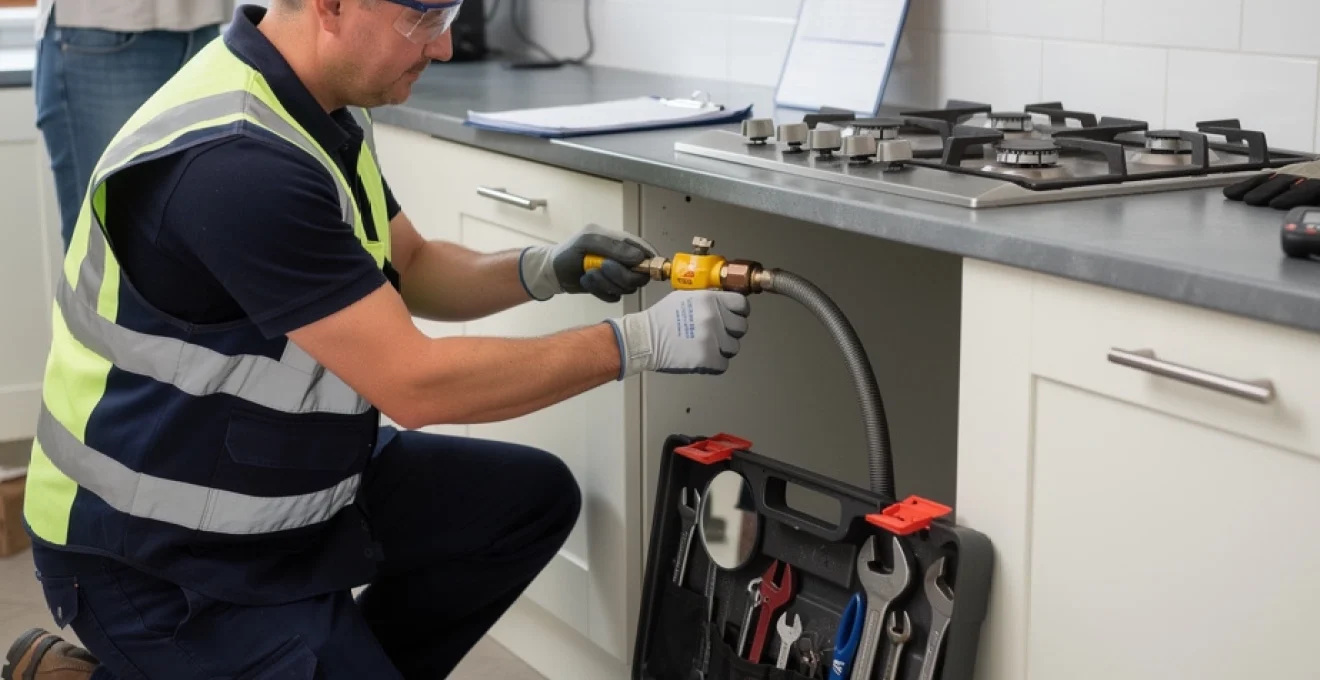
Gas hob disconnection represents one of the most critical safety considerations in kitchen renovations and appliance maintenance. The complexity of UK gas safety regulations, combined with the serious health and legal implications of improper gas work, makes this a topic that demands careful attention. Unlike simple electrical appliances that can be unplugged, gas hobs require specific procedures and professional oversight to ensure safe disconnection. Understanding these requirements protects both property and lives, whilst ensuring compliance with stringent UK legislation that governs all domestic gas installations.
Understanding UK gas safety regulations and legal requirements
The legal framework governing gas appliance disconnection in the UK is comprehensive and strictly enforced. Gas Safety (Installation and Use) Regulations 1998 establish clear boundaries around who can perform gas work, defining specific qualifications and certification requirements. These regulations carry serious penalties, including potential imprisonment of up to two years for unauthorised gas work. The legislation doesn’t distinguish between installation and disconnection when it comes to safety requirements, meaning that removing a gas hob requires the same level of professional competence as installing one.
Gas safety (installation and use) regulations 1998 compliance
The 1998 regulations form the cornerstone of UK gas safety law, establishing that any work on gas fittings, pipework, or appliances must be carried out by competent persons. Competence in this context specifically means holding current Gas Safe Register qualifications, not simply having practical experience or general plumbing knowledge. The regulations explicitly state that disconnecting gas appliances constitutes gas work, requiring proper certification and adherence to safety protocols.
Violation of these regulations can result in prosecution by the Health and Safety Executive (HSE), with penalties including substantial fines and imprisonment. Insurance companies routinely void policies when unauthorised gas work leads to incidents, leaving property owners financially exposed. The regulations also require proper documentation of all gas work, including disconnection procedures, which must be completed by qualified engineers.
HSE guidelines for domestic gas appliance disconnection
Health and Safety Executive guidelines provide detailed procedures for safe gas appliance disconnection. These guidelines emphasise the importance of proper isolation procedures, leak testing, and system integrity verification before, during, and after disconnection. The HSE mandates specific steps including emergency control valve identification, pressure testing, and proper capping of exposed pipework.
The guidelines also address ventilation requirements during disconnection work, specifying minimum air changes and ventilation standards to prevent gas accumulation. Atmospheric monitoring becomes crucial during disconnection procedures, with prescribed detection methods and response protocols for gas presence. Emergency procedures must be established before commencing any disconnection work, including evacuation plans and emergency service contact protocols.
Gas safe register engineer certification requirements
Gas Safe Register certification represents the only legally acceptable qualification for gas work in the UK. Engineers must hold specific competency certificates (ACS – Nationally Accredited Certification Scheme) that cover the type of work being undertaken. For domestic gas hob disconnection, engineers typically require Core Gas Safety (CCN1) certification plus specific domestic natural gas qualifications (CODNCO1).
These certifications require regular renewal and continuous professional development to maintain validity. Currency of qualification is critical, as expired certificates invalidate an engineer’s authority to perform gas work. Property owners should always verify engineer credentials through the Gas Safe Register website before permitting any gas work to commence.
Building regulations part J gas installation standards
Building Regulations Part J establishes construction and installation standards for gas systems in domestic properties. These regulations govern pipework installation, appliance positioning, and safety systems integration. When disconnecting gas hobs, engineers must ensure that any modifications to gas systems comply with current Part J requirements, particularly regarding pipe capping and system integrity.
Part J also addresses ventilation requirements and combustion air supplies, which may be affected by appliance removal. The regulations require assessment of ventilation adequacy following appliance disconnection, ensuring that remaining gas appliances continue to operate safely. Documentation requirements under Part J include updated installation records and safety certificates reflecting system modifications.
Essential safety equipment and gas isolation procedures
Proper gas isolation requires specific equipment and procedures that go far beyond simply turning off a tap. Professional gas engineers
Particularly when disconnecting a gas hob for kitchen renovations, engineers will typically arrive with calibrated test equipment, appropriately rated isolation valves, approved pipe caps and plugs, leak detection fluid, and suitable personal protective equipment. This professional equipment is essential for carrying out safe isolation, pressure testing, and final verification of the gas installation. Attempting to improvise with non-approved tools or household items is not only unsafe but can also render the entire gas installation non-compliant with UK regulations.
Emergency control valve (ECV) location and operation
The Emergency Control Valve (ECV) is the primary shut-off point for the gas supply to your property. In most UK homes, it is located next to the gas meter, which is often found in a meter box outside the property, under the stairs, or in a ground-floor cupboard. Being able to quickly locate and operate this valve is a fundamental part of safe gas hob disconnection and broader gas safety awareness.
To operate the ECV, the handle is usually turned a quarter turn so that it is at 90 degrees to the pipe, indicating the gas supply is shut off. When the handle is in line with the pipe, the gas is typically on. A Gas Safe engineer will confirm the valve’s operation before beginning any disconnection work and will ensure that vulnerable occupants know how to use it in case of a gas emergency. If your ECV is stiff, corroded, or difficult to access, this should be reported to your gas supplier for remedial action.
During a gas hob disconnection, the ECV is often used in combination with local isolation valves to provide layered protection. Think of it like having both a main stop tap and individual shut-off valves on a plumbing system: one isolates the whole supply, while the others provide more precise control. This redundancy helps reduce the risk of accidental gas release and allows the engineer to work methodically on the hob pipework while keeping the rest of the installation under control.
Bayonet fitting isolation techniques for hob connections
Many modern UK gas hobs are connected via a flexible hose and bayonet fitting, designed for safe disconnection when used correctly by a competent person. The bayonet fitting incorporates an internal valve that is intended to shut off the gas supply automatically when the hose is removed. However, this built-in shut-off should never be treated as the sole method of isolation for gas hob disconnection. Proper practice requires upstream isolation and verification that the bayonet is in good working condition.
A Gas Safe engineer will typically first isolate the supply using the local isolation valve on the rigid pipework feeding the bayonet, then confirm that the gas is off before gently releasing the bayonet connection. Once the flexible hose is removed, the engineer may fit an approved cap or plug to the bayonet, depending on whether the hob is being permanently removed or temporarily disconnected during renovation work. If the bayonet shows signs of wear, damage, or non-compliance with current standards, it will usually be replaced rather than reused.
Where older hobs are connected directly via rigid pipework without a bayonet fitting, the disconnection process becomes more complex and must follow stricter pipe isolation and capping procedures. In such cases, the engineer may need to cut back and re-terminate the pipework to meet current regulations. This is one of the reasons why DIY disconnection is strongly discouraged: without full understanding of the fitting type and isolation methods, you can easily leave a live, uncapped gas pipe in place.
Gas leak detection using soapy water solution method
Leak detection is a critical part of safe gas hob disconnection, and one of the most familiar techniques is the soapy water solution method. While professional engineers rely primarily on calibrated gas detectors and pressure testing equipment, a correctly mixed soapy solution remains a valuable secondary check for visible leaks on exposed joints and fittings. The principle is simple: escaping gas creates bubbles in the solution, making leaks easy to spot on accessible pipe connections.
To ensure reliability, the solution must be adequately concentrated and applied with care to all suspect joints after isolation and any reconnection or capping work. The engineer will look for continuous bubble formation, which indicates an active leak, rather than small, one-off bubbles caused by application. This visual method complements more precise testing using a manometer and provides additional reassurance, especially around newly installed caps, valves, and bayonet fittings.
For householders, it is important to understand that while soapy water can help confirm a suspected leak, it is not a substitute for professional gas tightness testing. Think of it like checking your car tyres by eye versus using a proper pressure gauge: a quick look may reveal obvious issues, but only calibrated equipment gives you a definitive reading. If you ever smell gas around a hob or capped supply, you should not rely on DIY tests; instead, follow emergency procedures and contact the National Gas Emergency Service.
Personal protective equipment requirements for gas work
Although domestic gas hob disconnection may appear straightforward, it still requires appropriate personal protective equipment (PPE) to manage the risks involved. Gas Safe engineers usually wear safety footwear, flame-resistant or non-melting work clothing, and suitable gloves to protect against sharp edges on appliances and pipework. Depending on the environment, eye protection may also be used, especially when cutting, de-burring, or working beneath cabinets where debris could fall.
In properties where there is limited ventilation or where past leaks have been suspected, engineers may use portable gas detectors to monitor the air while working. This equipment acts as a form of environmental PPE, alerting the engineer to dangerous gas concentrations before they become life-threatening. In rare cases, additional respiratory protection may be required if the workspace is highly confined or contaminated.
For homeowners, the key takeaway is that PPE is part of a broader safety culture that underpins UK gas work. If a tradesperson arrives to disconnect your gas hob without basic protective equipment or appropriate tools, this should raise immediate questions about their professionalism and competence. Proper PPE use, combined with adherence to gas safety regulations, significantly reduces the risk of injury or incident during hob removal.
Step-by-step gas hob disconnection process
Although only a Gas Safe registered engineer should physically carry out a gas hob disconnection in the UK, understanding the typical process helps you plan kitchen renovations and communicate clearly with your installer. The overall sequence is designed to manage risk at every stage, from initial inspection to final safety checks. You can think of it as a controlled shutdown, rather than a simple “unplug and remove” procedure.
First, the engineer will carry out a visual inspection of the existing installation, noting the hob type, connection method (bayonet or rigid pipework), accessibility, and condition of pipework, isolation valves, and surrounding units. They will locate the Emergency Control Valve and confirm that they can isolate the gas supply safely. At this stage, they may also ask about other gas appliances in the property, such as boilers or gas fires, to understand how the whole system is configured.
Next, the gas supply is isolated at the appropriate point, typically using a combination of the ECV and local isolation valves. The engineer will then confirm that the hob is no longer receiving gas, often by attempting to light the burners or checking at the connection point. Once isolation is verified, they will disconnect the hob from its gas connection, either by releasing the bayonet fitting or de-coupling rigid pipework, taking care not to strain or damage nearby pipes or joints.
After the hob is removed, the engineer will focus on making the installation safe for the period during which the appliance is absent. This usually involves fitting an approved gas cap or plug to the exposed supply and ensuring that any flexible hoses are removed if the removal is permanent. They will then perform tightness testing and leak checks on the capped or isolated pipework. Only once the system passes these tests should the area be considered safe for joiners, electricians, or kitchen fitters to continue their work.
When you are ready to install a new gas hob, the engineer will return to reverse the process with equal care. They will assess whether the existing pipework layout and ventilation meet current standards, adjust or reroute pipework if required, install or replace isolation valves and bayonet fittings, and then connect and commission the new appliance. As part of commissioning, burner pressures, flame stability, and ventilation adequacy will be checked, and the engineer will complete any relevant documentation to demonstrate compliance with UK gas safety requirements.
Post-disconnection safety verification and testing
Once a gas hob has been disconnected and either removed permanently or set aside during renovations, the focus shifts to verification and testing. This phase is essential to ensure that no residual risks remain within the gas installation. Without formal testing, a capped or isolated pipe may appear safe but could still be leaking, particularly in older properties where joints and fittings have been disturbed by building work.
Professional post-disconnection checks usually begin with a visual inspection of all exposed pipework, joints, and caps. The engineer will look for signs of corrosion, mechanical damage, inappropriate materials, or previous non-compliant alterations. Only after the visual inspection is satisfactory will they proceed to formal tightness testing using manometer equipment. This structured approach mirrors the way pilots run through checklists before take-off: it ensures that no critical step is overlooked.
Tightness testing procedures using manometer equipment
Tightness testing is the gold standard method for confirming that a domestic gas installation is sound after any work, including gas hob disconnection. Using a manometer, the engineer will apply a controlled pressure to the system, isolate it, and then monitor the pressure reading over a defined period. Any drop in pressure beyond permitted limits indicates a leak somewhere in the installation that must be identified and rectified before the system can be declared safe.
In a typical UK home, the test is carried out at the gas meter using either a digital or U‑tube manometer connected to the test point. The engineer will follow industry-standard procedures, such as those set out by IGEM or the Gas Industry Unsafe Situations Procedure, to ensure the test is valid. This includes accounting for temperature changes, system volume, and whether any appliances remain connected during the test.
From the householder’s perspective, tightness testing may look like a simple pressure check, but in reality it is a precise, regulated procedure. Much like a blood pressure test at a medical check-up, the results provide an early warning of underlying issues that may not yet be visible or obvious. A satisfactory tightness test after hob disconnection provides strong assurance that your capped or isolated gas pipework is not leaking and that it is safe to proceed with joinery, flooring, or electrical work in the kitchen.
Gas pipe capping and temporary sealing methods
When a gas hob is removed, the open supply point must never be left exposed; it must be securely capped or sealed using approved fittings. For a permanent removal, engineers will usually install a fixed cap or plug directly on the rigid pipework, often after cutting back and re-threading or re-terminating the pipe to a suitable position. This cap is then tested as part of the overall tightness test. The aim is to leave the installation in a state where gas can safely remain on for other appliances without any risk from the former hob connection.
For temporary disconnections during kitchen refurbishments, engineers may use removable caps or plugs on bayonet fittings or flexible hose connections, provided these methods comply with current gas safety standards. The key is that any temporary seal must be robust enough to withstand accidental knocks or movement as other trades work around the area. As with permanent caps, these temporary seals are subject to leak testing before the engineer leaves the property.
Homeowners sometimes wonder whether simply turning off the local isolation valve beneath the hob is sufficient. Under UK regulations and professional best practice, this is not acceptable as the sole protective measure. Valves can fail, be accidentally turned, or leak over time. Proper capping is like locking a door rather than just pushing it closed: it creates a positive, physical barrier that significantly reduces the risk of accidental gas escape.
Ventilation requirements after appliance removal
Removing a gas hob changes how your kitchen uses and moves air, especially if the hob was a major source of combustion in that space. While a disconnected hob no longer burns gas, the overall gas installation and any remaining appliances, such as boilers, water heaters, or gas fires, still require adequate ventilation. Part J of the Building Regulations and manufacturer instructions continue to apply even when one appliance is taken out of service.
A Gas Safe engineer will consider whether any ventilation grills, extractors, or room vents were originally sized with the hob in mind. If other gas appliances share the same space or rely on the same ventilation path, the engineer must ensure that removing the hob does not compromise their safe operation. For example, a boiler flue may still need clear air paths around kitchen units and ceilings, which can be affected by new cabinetry or bulkheads installed during renovation.
From a practical viewpoint, it is good practice to keep the kitchen well ventilated, particularly during and immediately after disconnection work. If residual gas were to escape for any reason, good airflow helps disperse it, reducing the risk of accumulation and ignition. This is one of the reasons why engineers often recommend opening windows and ensuring extraction fans are functional during significant gas work, even when all formal tests have been passed.
Documentation and safety certificate completion
Formal documentation is a vital part of gas hob disconnection under UK law and professional practice. After completing the disconnection, tightness testing, and verification steps, a Gas Safe engineer will usually provide written confirmation of the work carried out. This may take the form of a service record, job sheet, or specific safety certificate, depending on the scope and nature of the work. Landlords, in particular, must ensure that any changes to gas appliances are reflected in annual Landlord Gas Safety Records (CP12).
The documentation will typically note the date of disconnection, the appliances and pipework affected, the outcome of tightness tests, and any remedial work undertaken. If the hob has been permanently removed, the engineer may also record that the supply has been capped and that the remaining installation was found to be safe at the time of testing. This paperwork provides valuable evidence for insurers, building control officers, and future buyers that the gas system has been modified correctly.
Keeping these records safe is just as important as obtaining them. Should you later decide to sell your property, evidence of compliant gas work can help reassure surveyors and buyers, much like electrical installation certificates or FENSA certificates for windows. In the event of an incident, documented proof that a Gas Safe engineer carried out the disconnection can also be critical in demonstrating that you took reasonable steps to manage risks associated with your gas installation.
Professional gas engineer services vs DIY disconnection
Given the detailed procedures, legal obligations, and safety checks involved in gas hob disconnection, the contrast between professional services and DIY attempts is stark. While some homeowners may feel confident turning valves or loosening fittings, UK gas safety law is clear that only a competent person, typically a Gas Safe registered engineer, should undertake gas work. This applies equally to disconnection and installation, as both activities can introduce or reveal leaks and other hazards.
Professional gas engineer services bring three key advantages: legal compliance, technical expertise, and comprehensive insurance. Engineers are trained to follow current standards, identify hidden defects, and foresee risks that a layperson might miss, such as undersized pipework, inadequate ventilation, or outdated isolation valves. They also carry professional indemnity and public liability insurance, offering you financial protection if something goes wrong, which DIY work simply cannot provide.
From a cost perspective, many homeowners are surprised to find that a straightforward gas hob disconnection and later reconnection often costs less than expected, especially when booked alongside other work. When you consider potential penalties for unauthorised gas work, invalidated home insurance, and the life-threatening consequences of a gas leak or explosion, paying a qualified engineer is a very modest investment. Is saving a relatively small call-out fee worth risking your home, your family’s safety, and your legal standing?
There is also a practical dimension: a Gas Safe engineer can advise you on the best position for a new hob, the most suitable type of connection, and any upgrades needed to pipework or ventilation to meet modern standards. This can streamline your kitchen renovation and prevent costly changes later on. In contrast, DIY disconnection often results in engineers having to rectify unsafe or non-compliant work before they can proceed, which can increase both time and cost.
Common gas hob disconnection hazards and emergency response
Even when carried out by professionals, gas hob disconnection involves inherent hazards that must be managed carefully. The most obvious risk is gas escape leading to fire or explosion, but other dangers include carbon monoxide exposure from poorly adjusted appliances, damage to structural elements or wiring hidden behind cabinets, and incorrect reinstatement of ventilation. Understanding these risks helps you recognise why strict procedures and emergency plans are essential.
One of the most common hazards is accidental damage to gas pipework during kitchen demolition or flooring work after the hob has been removed. Joiners or DIY renovators may not realise that a capped gas pipe runs behind a particular panel or beneath a floor, and may cut or drill into it. This is why clear communication and marking of pipe routes are so important once a hob has been disconnected. Similarly, rushing to reconnect a hob without full testing can leave small leaks undetected, gradually filling confined spaces such as cupboards or voids.
If you ever smell gas, hear a hissing sound near pipework, or suspect a leak after hob disconnection, you should treat it as an emergency. The recommended response in the UK is to avoid operating electrical switches, open doors and windows to ventilate the area, extinguish naked flames, and immediately turn off the gas at the Emergency Control Valve if it is safe to do so. You should then call the National Gas Emergency Service on 0800 111 999 from a safe location and follow their instructions.
Another serious hazard is carbon monoxide (CO) poisoning, which can occur if other gas appliances are left operating in poorly ventilated spaces or if flues become obstructed during kitchen renovations. Although a disconnected hob itself will not produce CO, changes to room layout, extraction, or building fabric can indirectly affect other appliances. Maintaining working CO alarms in key locations and having remaining appliances checked after major building work is a simple yet powerful safeguard.
Ultimately, safe gas hob disconnection in the UK depends on a combination of legal compliance, professional expertise, and informed householders. By understanding the regulations, recognising the complexity of proper isolation and testing, and knowing how to respond in an emergency, you play an active role in protecting your home. Partnering with a qualified Gas Safe engineer ensures that both the disconnection and any subsequent reconnection of your hob are carried out to the highest safety standards, allowing you to focus on your new kitchen with confidence rather than concern.