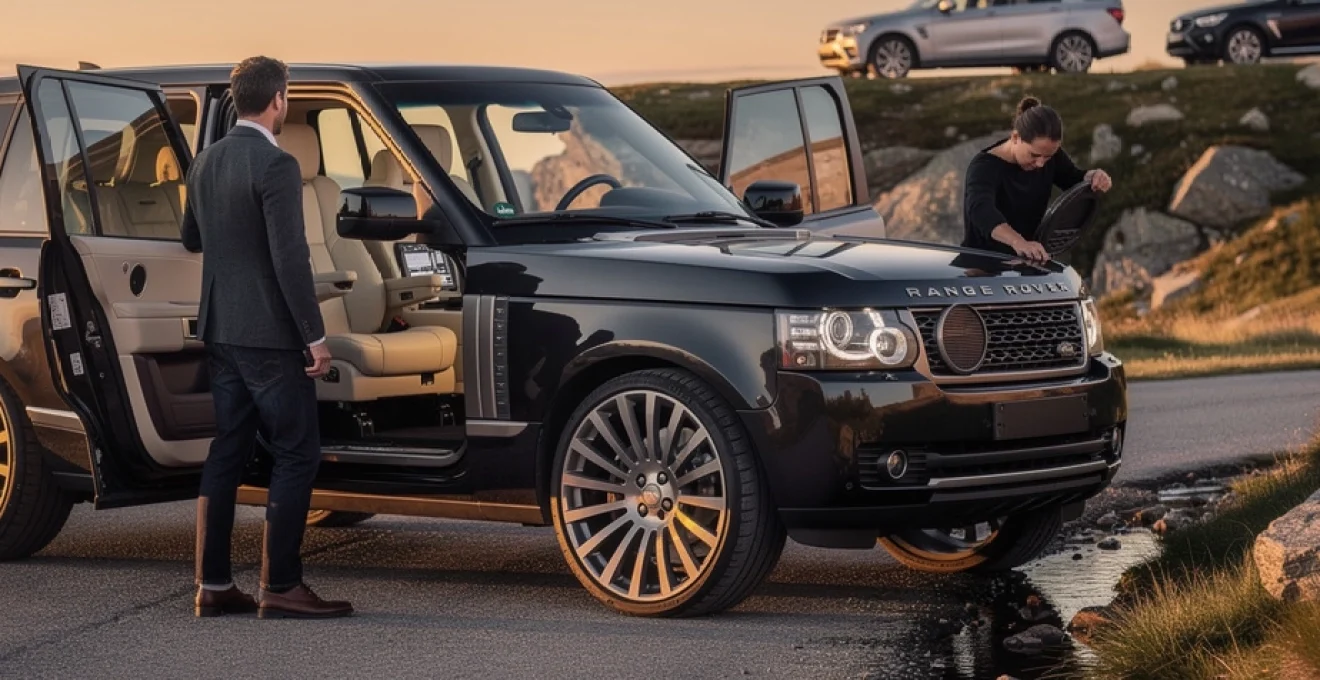
The Range Rover 4.2 Supercharged represents a pivotal moment in luxury SUV evolution, combining uncompromising off-road capability with devastating V8 performance. Introduced as part of the L322 generation’s mid-cycle refresh, this flagship model addressed critics who questioned whether Range Rover possessed sufficient power to match its premium positioning. The supercharged variant delivered a compelling answer, producing 396 brake horsepower from its Jaguar-derived AJ-V8 engine whilst maintaining the refined comfort and technological sophistication expected from Britain’s luxury marque.
What sets the 4.2 Supercharged apart from conventional luxury SUVs is its authentic dual-purpose nature. Unlike competitors that prioritise on-road dynamics at the expense of genuine off-road prowess, this Range Rover maintains extraordinary capability across all terrains. The integration of advanced terrain management systems, electronic air suspension, and a sophisticated all-wheel-drive architecture ensures that owners can transition seamlessly from urban motorways to challenging off-road environments without compromise.
Range rover L322 4.2 supercharged engine specifications and performance metrics
The heart of the Range Rover 4.2 Supercharged lies in its meticulously engineered powertrain, representing a collaboration between Land Rover and Jaguar engineering teams. This partnership produced one of the most potent luxury SUV engines of its era, establishing new benchmarks for both performance and refinement in the premium off-road segment.
Jaguar-derived AJ-V8 4.2-litre supercharged engine architecture
The AJ-V8 engine architecture forms the foundation of the Range Rover’s impressive performance credentials. Developed initially for Jaguar’s sports saloons, this all-aluminium construction features a 90-degree V-configuration with dual overhead camshafts and variable valve timing on both intake and exhaust camshafts. The lightweight aluminium block and heads contribute significantly to the engine’s impressive power-to-weight ratio, whilst advanced metallurgy ensures exceptional durability under demanding conditions.
Engineers specified a bore and stroke configuration of 86mm x 90.3mm respectively, resulting in a total displacement of 4,196cc. This relatively oversquare design promotes high-rpm breathing characteristics whilst maintaining excellent low-end torque production. The engine features forged steel connecting rods, lightweight pistons with low-friction coatings, and a sophisticated crankshaft design that minimises internal friction losses.
Eaton M112 supercharger system and intercooler configuration
The Eaton M112 supercharger represents a masterpiece of forced induction engineering, delivering consistent boost pressure across the engine’s entire operating range. This positive displacement supercharger features twin three-lobe rotors that compress incoming air to approximately 0.8 bar above atmospheric pressure. Unlike turbocharger systems, the mechanically-driven supercharger provides instantaneous throttle response without lag, making it ideally suited to the Range Rover’s luxury positioning.
An air-to-air intercooler system reduces intake charge temperatures by approximately 60 degrees Celsius, maximising power density whilst protecting engine internals from excessive heat stress. The intercooler assembly is strategically positioned within the engine bay to optimise airflow whilst maintaining the vehicle’s impressive wading depth capabilities. This configuration ensures consistent performance even during extended off-road adventures or challenging towing scenarios.
Power output analysis: 396bhp at 5,750rpm and 410lb-ft torque delivery
The supercharged V8 produces its maximum power output of 396 brake horsepower at 5,750rpm, whilst peak torque of 410lb-ft arrives at 3,500rpm. This torque curve characteristic provides exceptional flexibility for both on-road performance and off-road capability. The engine maintains over 350lb-ft of torque from just 2,000rpm through to 6,000rpm, creating a remarkably broad powerband that suits the Range Rover’s diverse operational requirements.
When compared to naturally aspirated alternatives, the supercharged configuration
when operating under comparable conditions demonstrates a substantial uplift in usable performance without sacrificing refinement. In everyday driving, you rarely need to extend the revs beyond the mid-range, as the supercharger ensures effortless acceleration with minimal throttle input. This characteristic not only suits relaxed motorway cruising but also proves invaluable when towing heavy loads or climbing steep off-road gradients where sustained torque is essential.
From an engineering standpoint, the combination of broad torque delivery and high specific output allowed Land Rover to calibrate the six-speed automatic transmission for both smoothness and responsiveness. Gear changes are executed quickly yet unobtrusively, with the transmission eager to access the core of the torque band rather than hunting between ratios. For owners, this translates into a sense of unstrained performance: the Range Rover 4.2 Supercharged feels as if it has power in reserve at all times, whether overtaking at speed or pulling away from a muddy trail.
Acceleration benchmarks: 0-60mph in 6.2 seconds performance data
Despite its substantial kerb weight, the Range Rover L322 4.2 Supercharged posts impressive acceleration figures for a luxury SUV. Independent testing consistently records 0-60mph times in the region of 6.2 seconds, placing it firmly in performance car territory for its era. In-gear acceleration is equally compelling; 50-70mph overtakes can be dispatched in a matter of seconds, even on inclines, thanks to the combination of forced induction and tightly spaced gearbox ratios.
These performance metrics are even more notable when you consider the vehicle’s full-time all-wheel-drive system and tall, upright bodywork. Aerodynamic efficiency was never the primary design objective for the Range Rover, yet the 4.2 Supercharged still achieves motorway speeds with a composed, unhurried demeanour. If you are upgrading from a naturally aspirated V8 model, you will notice the difference most in mid-range response rather than outright top speed; the supercharged engine simply feels stronger and more immediate in everyday driving scenarios.
Owners who value objective performance data will appreciate how the 4.2 Supercharged narrows the gap to contemporary performance SUVs while retaining true off-road capability. While a BMW X5 4.8iS or Mercedes ML55 AMG might feel marginally sharper in a straight line, few rivals combine a sub-7-second 0-60mph sprint with the ability to wade through deep water or tackle rock-strewn tracks. In practice, this means you can enjoy sports-saloon levels of pace without compromising the go-anywhere character that defines the Range Rover badge.
Luxury interior technologies and premium cabin features
The Range Rover 4.2 Supercharged is not defined solely by its powertrain; its interior environment plays an equally important role in its appeal. Step inside and you are met with a carefully curated blend of traditional craftsmanship and advanced technology, designed to deliver long-distance comfort and effortless control. From its high-grade materials to its sophisticated infotainment systems, every element of the cabin reinforces the model’s status as a flagship luxury SUV.
Where some competitors focus primarily on sporty aesthetics, the L322’s interior is more akin to a contemporary luxury lounge. The high seating position, expansive glass area and intuitive layout make the driver feel in command yet relaxed, whether navigating city streets or remote tracks. For many owners, this sense of calm isolation from the outside world is just as important as the Range Rover 4.2 Supercharged’s headline performance figures.
Harman kardon logic7 surround sound system integration
Central to the in-cabin experience is the Harman Kardon Logic7 surround sound system, fitted as standard or available as an option depending on model year and specification. This premium audio setup uses a multi-channel amplifier and carefully tuned speakers to deliver a genuine surround sound effect, rather than simply increasing volume. For long motorway journeys or cross-country expeditions, the clarity and depth of the audio system transform the cabin into a private listening space.
The Logic7 processing algorithm distributes sound across multiple channels, creating a three-dimensional soundstage for both front and rear passengers. Whether you are streaming music via Bluetooth (on later models), listening to radio broadcasts or playing CDs, the system maintains impressive fidelity even at higher volumes. It is particularly effective at masking background noise, complementing the L322’s already low NVH levels achieved through laminated glass and extensive sound insulation.
For enthusiasts who spend hours behind the wheel, this high-end audio integration is more than a luxury; it becomes part of the everyday driving ritual. You can think of the Harman Kardon Logic7 system as the automotive equivalent of a high-quality home cinema setup: once you experience it, stepping back to a basic audio system feels like a significant downgrade. If you are evaluating a used Range Rover 4.2 Supercharged, ensuring the audio system functions correctly should be one of your inspection priorities.
Oxford leather upholstery with heated and cooled seat functions
The Range Rover 4.2 Supercharged’s seats are trimmed in supple Oxford leather, a hallmark of Land Rover’s commitment to tactile quality. The leather is both durable and soft to the touch, ageing gracefully when properly maintained. Front seats typically feature electric adjustment with memory functions, allowing multiple drivers to find their ideal position quickly and easily, while rear seats offer generous legroom and supportive cushioning for longer journeys.
Heated front and rear seats are standard on many specifications, with ventilated or cooled seat functions available on higher trims and later model years. This dual heating and cooling capability significantly enhances comfort across a wide range of climates. On a cold winter morning, the rapid seat heating makes the cabin feel inviting within seconds, while in hot weather the cooling function helps prevent the leather from becoming uncomfortably warm.
From a practical standpoint, these advanced seat functions also contribute to driver alertness and well-being. If you regularly undertake long trips, being able to fine-tune seat temperature can reduce fatigue and discomfort over time. When inspecting a pre-owned Range Rover 4.2 Supercharged, it is wise to test each seat’s heating and cooling system individually, as failed elements or fans can be costly to rectify if neglected by previous owners.
Dual-zone automatic climate control with rear passenger controls
Complementing the seat functions is a sophisticated dual-zone automatic climate control system, which allows the driver and front passenger to select independent temperature settings. The system uses multiple sensors to monitor cabin and exterior temperatures, automatically adjusting fan speed and air distribution to maintain the chosen climate with minimal manual intervention. In practice, this means you can set a comfortable temperature and simply forget about it, even as weather conditions change.
Rear passengers are not overlooked; many versions of the Range Rover 4.2 Supercharged offer additional climate controls for the back seats. These can include separate fan speed adjustments and air distribution settings, ensuring that all occupants remain comfortable regardless of their position. For families or those who regularly travel with passengers, this level of control helps prevent the familiar “too hot in the back, too cold in the front” complaints.
Viewed holistically, the combination of climate control, heated and cooled seats, and extensive insulation creates an environment where external weather becomes largely irrelevant. Whether you are crossing a frozen mountain pass or idling in hot urban traffic, the cabin remains a consistent oasis of comfort. For many buyers, this subtle but constant sense of well-being is what elevates the Range Rover 4.2 Supercharged above more utilitarian SUVs.
Alpine navigation system with DVD-based mapping technology
During the L322 4.2 Supercharged’s production run, the Alpine navigation system with DVD-based mapping represented cutting-edge factory technology. The system utilised a DVD drive, typically mounted in the boot, to store regional map data and routing information. While it may seem modest compared to modern smartphone navigation, at the time it offered a valuable combination of turn-by-turn directions, points of interest and off-road mapping capabilities.
The high-mounted central display screen provides clear, legible mapping guidance, which is particularly useful given the elevated driving position. Route calculation times are reasonable, and voice guidance helps keep your attention focused on the road ahead, whether you’re navigating unfamiliar city streets or heading towards a remote trailhead. For owners who often venture off the beaten path, the built-in navigation can serve as a reliable backup to modern mobile apps, especially in areas with poor cellular coverage.
One practical consideration with DVD-based navigation systems is the importance of keeping mapping discs updated. Many specialist dealers and online communities still support map updates for the L322 platform, enabling you to bring the system as up to date as possible. If you are evaluating a used Range Rover 4.2 Supercharged, it is worth confirming that the navigation unit reads discs correctly and that the screen is free from dead pixels or backlight issues, as repairs can be more complex than on simpler audio-only head units.
Advanced terrain response system and all-wheel drive capabilities
Beyond luxury and performance, the defining characteristic of the Range Rover 4.2 Supercharged is its genuine off-road pedigree. Where many premium SUVs offer only light-duty all-wheel drive systems, the L322 platform incorporates robust hardware and intelligent software to tackle challenging terrain with ease. The result is a vehicle that feels almost as capable in the wilderness as it does refined on the motorway.
Although the earliest 4.2 Supercharged models pre-date Land Rover’s branded Terrain Response rotary controller, they still employ a sophisticated suite of traction aids and drivetrain technologies. These systems work together seamlessly in the background, allowing you to concentrate on steering and throttle inputs while the electronics optimise grip and stability. Think of it as having a team of experienced off-road instructors silently assisting you at every wheel.
Electronic traction control and hill descent control mechanisms
Electronic Traction Control (ETC) is at the core of the Range Rover’s off-road prowess, using wheel-speed sensors and the ABS system to detect and mitigate wheel slip. When one wheel begins to spin, the system applies braking force to that wheel, effectively redirecting torque to the wheels with better grip. On loose surfaces like gravel, sand or wet grass, this can make the difference between effortless progress and frustrating wheelspin.
Hill Descent Control (HDC) complements ETC by managing downhill speed on steep, slippery slopes. Once activated, HDC uses the ABS system to apply precise braking to individual wheels, maintaining a controlled crawl speed without requiring constant pedal input. This not only enhances safety but also reduces driver fatigue, especially on long descents where maintaining consistent braking manually would be challenging.
From a user perspective, these systems are designed to be intuitive. With simple dashboard switches and clear indicator lights, you can engage traction aids as needed without navigating complex menus. If you are new to serious off-roading, ETC and HDC act like electronic safety nets, helping you tackle obstacles that might otherwise feel intimidating. For experienced off-road drivers, they provide an additional layer of control that can be selectively employed in the most demanding conditions.
Two-speed transfer case with low-range gear reduction
A key differentiator between the Range Rover 4.2 Supercharged and many so-called “crossover” SUVs is its two-speed transfer case. This component allows the driver to select between high-range gearing for normal on-road driving and low-range gearing for demanding off-road scenarios. Low range multiplies the available torque at the wheels, enabling controlled progress at very low speeds over rocks, mud, or steep inclines.
Engagement of low range is typically handled electronically via a console-mounted switch, with the system synchronising gear changes to minimise mechanical stress. When low range is selected, throttle mapping and traction control calibrations adjust accordingly, giving you finer control over wheel speed and torque delivery. This level of configurability is what makes the Range Rover 4.2 Supercharged feel so composed in terrain where lesser SUVs would struggle.
For owners who intend to use their vehicle for towing, the low-range gear reduction is also invaluable. Launching a heavy trailer on a steep slipway or navigating a fully loaded horsebox through muddy fields becomes significantly easier when you can draw on the full capabilities of the two-speed transfer case. It is one of those features that you may not use every day, but when you need it, nothing else will quite substitute.
Electronic air suspension with cross-linked technology
The L322’s electronic air suspension system is as much about comfort as it is about capability. Each corner of the vehicle is supported by an air spring, with ride height and damping characteristics controlled electronically. At motorway speeds, the system can lower the vehicle slightly to improve stability and aerodynamics, while at low speeds you can raise the suspension to increase ground clearance for off-road obstacles.
Cross-linked air suspension technology further enhances articulation by allowing diagonally opposed air springs to communicate pressure changes. In simple terms, when one wheel drops into a rut or climbs a rock, the system can transfer pressure to maintain better contact for the opposite wheel. The result is improved traction and a more composed body stance, even when the ground beneath you is heavily cambered or deeply rutted.
For everyday driving, the air suspension provides a remarkably smooth ride, ironing out imperfections that might unsettle more conventional coil-sprung SUVs. However, as with any complex system, it does introduce additional maintenance considerations. If you are considering a used Range Rover 4.2 Supercharged, it is wise to budget for potential air suspension repairs over the vehicle’s lifetime, particularly if the car has covered high mileage or has seen extensive off-road use.
Wade sensing system for deep water crossing capability
Water crossings are a scenario where many performance SUVs simply have to turn back, yet the Range Rover 4.2 Supercharged is engineered with genuine wading capability in mind. With a manufacturer-quoted wading depth of up to 500mm to 700mm depending on model year and tyre specification, the L322 can traverse fords, flooded roads and shallow rivers that would immobilise less capable vehicles. Key components, including air intakes and electrical systems, are positioned and sealed to resist water ingress.
Some later Land Rover models introduced dedicated wade sensing systems with ultrasonic sensors, but even without this fully digital interface, the 4.2 Supercharged benefits from extensive engineering for water management. Raised breather lines for major drivetrain components help prevent water contamination, and careful body sealing minimises the risk of cabin ingress. For drivers who routinely encounter rural flooding or need to access remote properties, this capability can be more than just an adventurous talking point—it becomes a genuine practical advantage.
Of course, even a capable vehicle like the Range Rover demands respect around deep water. You should always assess water depth, current strength and unseen obstacles before attempting any crossing. Think of the vehicle’s wading ability as an extra tool in your off-road toolkit: incredibly useful when used wisely, but never a substitute for sound judgement and proper preparation.
Build quality assessment and common maintenance considerations
The Range Rover 4.2 Supercharged occupies an interesting position in terms of build quality and reliability. On one hand, it benefits from extensive use of premium materials, robust drivetrain components and a well-developed AJ-V8 engine architecture. On the other, its complexity—particularly in electronics, air suspension and ancillary systems—means that diligent maintenance is vital to long-term ownership satisfaction.
From a structural perspective, the L322 platform is solid and well protected, with extensive galvanisation and underbody coatings to resist corrosion. Interior materials such as leather, real wood veneers and soft-touch plastics generally wear well when cared for, though high-mileage examples may show creasing on driver’s seat bolsters and minor trim rattles. If you are inspecting a potential purchase, pay close attention to the condition of switchgear, door seals and infotainment controls, as these can give clues about how carefully the vehicle has been treated.
Mechanically, the 4.2-litre supercharged AJ-V8 is widely regarded as a strong and dependable engine when serviced correctly. Regular oil changes with high-quality synthetic oil, adherence to coolant change intervals and timely replacement of ancillary components such as belts and tensioners are key to longevity. Common engine-related concerns on ageing vehicles can include supercharger nose cone wear, coolant leaks from plastic fittings, and issues with PCV (positive crankcase ventilation) systems, but these are generally manageable with proactive maintenance.
The most frequent talking point among prospective owners is the air suspension and associated electronics. Over time, air springs can develop leaks, compressors can wear, and height sensors may fail or go out of calibration. While none of these issues are insurmountable, they can be expensive if several components fail simultaneously. As a rule of thumb, if you are buying a used Range Rover 4.2 Supercharged, it is sensible to obtain a pre-purchase inspection from a Land Rover specialist and to reserve an annual contingency budget for unexpected repairs.
Electrical systems, including the infotainment, navigation, and body control modules, can occasionally exhibit glitches on older examples. Symptoms might include intermittent warning lights, non-functional parking sensors, or erratic window and mirror behaviour. Many of these issues can be resolved through diagnostic scans and targeted repairs rather than wholesale component replacement, highlighting the value of working with workshops familiar with the L322 platform. When maintained with care and used as intended, the Range Rover 4.2 Supercharged can provide years of dependable service, but it rewards owners who approach it with a preventive rather than purely reactive maintenance mindset.
Market positioning against BMW X5 4.8is and mercedes ML55 AMG competitors
When the Range Rover L322 4.2 Supercharged launched, its most direct competitors were high-performance luxury SUVs such as the BMW X5 4.8iS and the Mercedes-Benz ML55 AMG. Each of these models brought its own philosophy to the segment: the BMW emphasised sharp on-road dynamics, the Mercedes prioritised straight-line performance and AMG character, while the Range Rover sought to blend luxury, off-road capability and V8 power in a single package. Understanding these differences is helpful if you are comparing used examples today.
In terms of pure on-road agility, the X5 4.8iS and ML55 AMG arguably hold a slight edge. Their lower ride heights, firmer suspension setups and lighter kerb weights deliver a more overtly sporty driving experience on smooth tarmac. If your priorities are lap times and cornering limits, the German rivals might feel more immediately engaging. However, this focus often comes at the expense of ride comfort and off-road ability, particularly when faced with poor road surfaces or inclement weather.
The Range Rover 4.2 Supercharged takes a different approach, favouring a more relaxed, commanding driving style. Its steering is deliberately weighted for stability rather than razor-sharp response, and the air suspension is tuned to absorb rather than transmit imperfections. While it may lean slightly more in corners than its German counterparts, it compensates by offering a sense of imperious calm that few vehicles can match. On a long journey that mixes motorways, B-roads and unpaved tracks, many drivers find the Range Rover’s blend of comfort and capability more rewarding overall.
In terms of image and ownership experience, the Range Rover 4.2 Supercharged occupies a more traditional luxury space. Its design language, both inside and out, is timeless rather than overtly aggressive, appealing to buyers who prefer understated prestige. The BMW and Mercedes alternatives project a sportier, more extroverted personality, which some owners will find attractive but others may consider less versatile in professional or formal contexts. Ultimately, your choice may come down to whether you view your SUV as a performance car on stilts or as a go-anywhere luxury vehicle that happens to be very fast.
From a used market perspective, all three models require careful selection and ongoing maintenance investment. However, the Range Rover’s unique combination of supercharged V8 power, genuine off-road hardware and luxury interior appointments gives it a distinctive value proposition. If you are looking for a high-end SUV that can credibly replace both a luxury saloon and a traditional 4×4, the Range Rover L322 4.2 Supercharged stands out as a compelling and characterful choice—even when measured against strong competition from BMW and Mercedes-Benz.