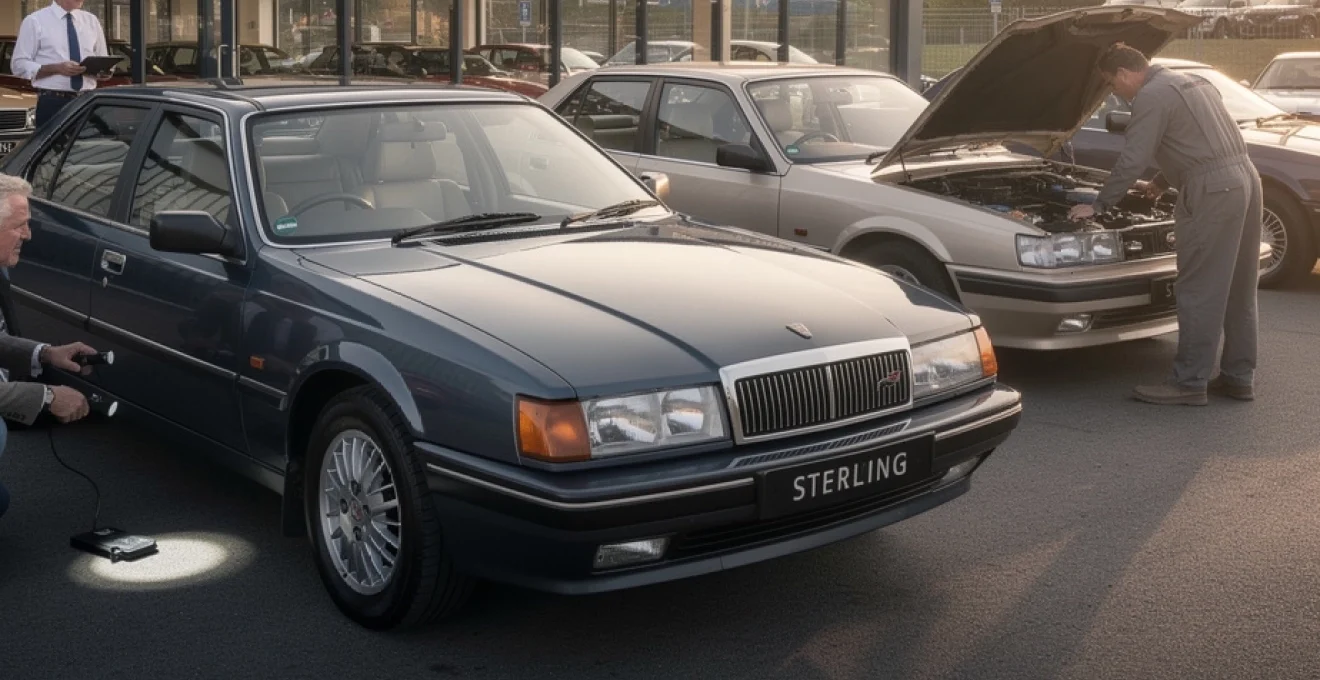
The Rover Sterling represents a fascinating chapter in British automotive history, embodying the ambitious collaboration between Austin Rover Group and Honda during the late 1980s. This executive saloon, marketed as the Sterling in North America and as part of the Rover 800 series in the UK, sought to combine British luxury heritage with Japanese engineering precision. Today, finding a well-preserved example presents a genuine challenge for collectors and enthusiasts, with only 118 licensed vehicles remaining on UK roads and 362 on SORN status. The rarity of these vehicles, combined with their historical significance and cultural cachet—famously driven by Alan Partridge in the beloved British sitcom—has created a niche but dedicated market where values range from £800 to £4,104, with a median price of £2,211.
For those seeking to acquire one of these distinctive executive saloons, understanding where to look and what to expect becomes essential. The combination of limited surviving examples, specialist knowledge required for proper maintenance, and the vehicle’s unique position in automotive history makes the search for a Rover Sterling both challenging and rewarding. Whether you’re a dedicated Rover enthusiast, a collector of 1980s executive cars, or simply someone who appreciates the blend of British craftsmanship and Honda reliability, knowing the right sources and channels can make all the difference in securing a quality example.
Rover sterling model history and production specifications
Austin rover group development and launch timeline 1984-1987
The Rover Sterling emerged from one of the most significant Anglo-Japanese collaborations in automotive history. Development commenced in 1984 when Austin Rover Group and Honda agreed to jointly create a successor to the ageing Rover SD1. This partnership, known internally as the XX project, represented a strategic move by both manufacturers to share development costs whilst accessing each other’s expertise. The British side contributed styling and luxury interior design knowledge, while Honda provided advanced engineering and quality control processes that had made Japanese vehicles synonymous with reliability.
Production officially began in 1986 at the Cowley plant in Oxford, with initial models reaching showrooms in early 1987. The Sterling badge was specifically reserved for the top-specification models, denoting the most luxurious trim level available. Early production suffered from well-documented quality issues that affected the model’s reputation, particularly in the crucial North American market where the car was sold exclusively as the Sterling. These teething problems, including electrical gremlins and build quality inconsistencies, were gradually addressed through 1988 and 1989, but the initial damage to consumer confidence proved difficult to overcome.
The partnership with Honda extended beyond mere badge engineering. The platform shared significant components with the Honda Legend, including fundamental chassis architecture and engine technology. However, the Sterling maintained distinctly British character through its interior appointments, ride tuning, and styling details. This collaboration marked a pivotal moment in British automotive manufacturing, demonstrating that international partnerships could produce competitive executive cars during a period when domestic manufacturers struggled independently.
Engine variants: honda 2.0-litre O-Series and 2.7-litre V6 powertrains
The Rover Sterling range offered two primary engine configurations, each catering to different market segments and customer preferences. The entry-level 820 models featured a 2.0-litre four-cylinder engine, available in both naturally aspirated and turbocharged variants. This powerplant represented British engineering, delivering adequate performance for daily executive transport whilst offering reasonable fuel economy. The turbocharged version provided notably improved performance, though it required more careful maintenance and attention to service intervals.
The flagship 827 Sterling, however, showcased the collaboration’s true potential with its Honda-sourced 2.7-litre V6 engine. This smooth, refined powerplant produced 173 bhp and 177 lb/ft of torque, propelling the substantial executive saloon to 62 mph in just 9.5 seconds and onwards to a top speed of 131 mph. Coupled exclusively with a four-speed automatic transmission, this engine exemplified the refined luxury that Sterling buyers expected. The V6’s legendary reliability and characteristically smooth power delivery made it the preferred choice among enthusiasts and remains the most sought-after variant in today’s classic car market.
An intermediate option, the 825 Sterling, featured a
An intermediate option, the 825 Sterling, featured a 2.5-litre V6 that bridged the gap between the four-cylinder 820 and the range-topping 827. Offering smoother refinement than the 2.0-litre unit but slightly lower running costs than the 2.7-litre engine, the 825 appealed to buyers seeking a balanced blend of performance and economy. In today’s market, this makes the 825 a particularly interesting Rover Sterling for sale, as it often attracts less attention than the 827 while still delivering the hallmark V6 smoothness. Whichever engine you choose, it is crucial to verify service history, cambelt changes (where applicable), and regular fluid changes, as these factors now play a bigger role in longevity than the original factory specifications. A well-maintained powertrain can transform the ownership experience from potentially troublesome to genuinely rewarding.
Distinguishing features between sterling 820, 825 and 827 models
For buyers comparing Rover Sterling models, understanding the differences between the 820, 825 and 827 is essential before you commit to a purchase. The 820 Sterling typically used a four-cylinder 2.0-litre engine and was often specified with slightly less lavish equipment than its V6 counterparts, though it still carried the Sterling badge and associated luxury trim. The 825 Sterling, with its 2.5-litre V6, occupied a middle ground, offering more refinement and power than the 820 while often being priced more attractively than the 827 on the classic market. Finally, the 827 Sterling stood at the top of the range, usually paired with the highest equipment levels, the most powerful 2.7-litre V6 and, in many cases, additional comfort and convenience features.
Visually, the distinctions between these Rover Sterling variants can be subtle, especially to the untrained eye browsing Sterling 827 cars for sale online. Most of the external styling cues were shared across the 800 series, including the familiar saloon and fastback body styles, alloy wheels, and chrome detailing. Engine designations on the bootlid, V6 badges, and trim codes in the logbook or on the chassis plate are often the most reliable ways to identify a particular model. Interior differences may include varying seat upholstery patterns, wood trim finishes and optional extras such as electric memory seats, premium audio systems or sunroofs. When in doubt, checking the VIN and consulting a Rover 800 specialist or owners’ club can help clarify exactly which Sterling variant you are viewing.
From a driving perspective, the 820, 825 and 827 each offer a distinct character that potential buyers should experience if possible. The 820 feels lighter on its feet and slightly more economical, making it a sensible choice if you intend to use your Rover Sterling as a regular classic commuter. The 825 delivers a noticeable step up in refinement, with quieter running and smoother acceleration, while the 827 is the car that most closely matches period rival executive saloons in outright performance and effortless cruising ability. As with many classic cars, choosing the “best” model depends less on output figures and more on how you plan to use the car, the condition of the example available, and whether originality or day-to-day usability matters more to you.
Limited production numbers and surviving vehicle statistics
Compared with mass-market models of the era, production volumes for the Rover Sterling and the wider 800 series were modest, and attrition over three decades has only increased their rarity. Exact global production figures vary by source, but it is widely accepted that total Rover 800 output ran into the hundreds of thousands, with Sterling-badged, high-specification variants making up only a small proportion of that total. Factors such as early depreciation, fleet disposal policies and the cost of major repairs in the 2000s led many examples to be scrapped long before they became recognised classics. As a result, finding a Rover Sterling for sale today is far more challenging than sourcing contemporary German or Japanese executive saloons.
In the UK, current registration data highlights just how rare these cars have become on domestic roads. Recent figures indicate that only around 118 Rover Sterling (and closely related high-spec 800 models) remain licensed for road use, with a further 362 recorded as SORN (Statutory Off Road Notification). That means fewer than 500 known examples are present in the UK, combining both running and stored cars, many of which may require extensive restoration before they return to the road. When you consider that many of these are standard 800s rather than top-tier Sterling V6 variants, the pool of genuinely exceptional cars shrinks even further.
What does this mean for buyers searching for a Rover Sterling 827 for sale or hunting a low-mileage 820 or 825? In practice, it means patience and flexibility are vital. You may need to compromise on colour, trim or even engine variant, focusing instead on structural condition, documentation and originality. The limited supply also contributes to the wide price spread: project cars can still appear around the £800 mark, while exceptional, low-mileage or historically interesting examples have exceeded £4,000 and, in rare cases, £5,000 at auction since 2020. As more enthusiasts recognise the model’s significance, surviving cars are likely to become more tightly held, underlining the importance of acting decisively when a good example appears.
Specialist classic car dealers stocking rover sterling inventory
Established british marque specialists: barons classic cars and JD classics
When you start searching for a Rover Sterling for sale in the UK, specialist classic car dealers are often the most reliable route to a properly inspected vehicle. Well-regarded British marque specialists such as Barons Classic Cars and JD Classics have extensive experience with executive saloons from the 1980s and 1990s, including Rover 800-series models. These dealers may not always have a Sterling in stock, but they often know which cars are about to come to market or are available off-market from long-term clients. Because they understand the model’s quirks and rarity, they are also more likely to appraise and prepare these vehicles to a higher standard than general used car dealers.
One of the biggest advantages of buying through an established specialist is access to detailed history files and transparent condition reports. Many Rover Sterling examples that reach this level of dealership have comprehensive service records, MOT histories, and paperwork such as original sales invoices, owner manuals and period brochures. This documentation not only adds value but also helps you verify mileage claims and track major work such as engine overhauls or cosmetic restorations. In a market where some surviving cars have lived hard lives, this paper trail can be as valuable as the metal itself.
Dealers at this level also tend to have a network of trusted workshops, trimmers and parts suppliers familiar with the Rover 800 series. If you are new to classics or lack the time and expertise to manage a rolling project, this can make ownership far less daunting. You might pay a premium compared with a private sale, but in return you benefit from curated stock, the possibility of a warranty, and post-sale support. For many buyers, especially those targeting a top-condition Rover Sterling 827 for occasional use, this peace of mind justifies the higher initial outlay.
Regional independent dealers specialising in 1980s executive saloons
Below the headline names sit a group of regional independent dealers who focus on 1980s and 1990s executive saloons generally, rather than a single marque. These businesses often have rotating stock of BMW 5-Series, Mercedes W124, Saab 9000, Honda Legend and, occasionally, Rover 800 and Sterling models. Because they understand the appeal of this era of car, they tend to present their stock more sympathetically than mainstream used car lots, highlighting originality, mileage and history rather than just age and price. If you are willing to travel, monitoring these specialists can be a fruitful way to uncover a well-priced Rover Sterling for sale that might not appear on the radar of larger classic dealers.
Regional independents are also where you are most likely to find “time-warp” cars that have been owned by the same family for many years and are finally coming to market. These examples may have modest mileage, extensive history and have been garaged, yet be priced competitively because they lack the polish of a showroom restoration. As long as you approach them with a critical eye and ideally arrange a pre-purchase inspection, such cars can represent some of the best value in the current Rover Sterling market. The key is to act quickly, as enthusiasts often monitor these dealers closely and good cars seldom linger online for long.
How can you locate these regional specialists? Many advertise on classic-focused platforms and also maintain their own websites and social media pages, where incoming stock is teased before full adverts are published. Setting alerts for terms such as “Rover 800 Sterling for sale” and “Rover 827 V6” can help you spot new listings early. Additionally, speaking directly to dealers and letting them know you are looking for a specific model can put you on an informal waiting list, giving you first refusal when a suitable car appears.
Import specialists sourcing left-hand drive sterling models from north america
Because the Rover Sterling was marketed simply as “Sterling” in North America, there remains a small but interesting pool of left-hand drive cars in the United States and Canada. Import specialists who focus on bringing rare European and Japanese classics back from overseas can sometimes source these cars for UK or European buyers. While the numbers are relatively low, this route can be particularly appealing if you are looking for a left-hand drive Rover Sterling 825 or 827 for use on the continent, or if you want a car with US-market history for shows and events. The North American market also tended to favour higher-specification models, so many surviving cars are well-equipped V6 variants.
Working with an import specialist does add layers of complexity and cost compared with buying domestically. You will need to account for shipping, insurance, import duty and VAT where applicable, as well as registration fees and any modifications required to comply with local regulations. However, an experienced broker can manage much of this process for you, from inspecting the car overseas through to handling paperwork and transport. For some enthusiasts, the added story of a “repatriated” Sterling with American provenance enhances the car’s appeal and uniqueness.
Before pursuing this route, it is vital to weigh up whether the total cost of acquisition justifies the result. In many cases, you could buy an excellent right-hand drive Rover Sterling in the UK for less than the full import cost of a similar US-market car. That said, for collectors who value rarity, left-hand drive usability or the specific spec combinations found overseas, import specialists remain a valuable part of the search strategy. As with any specialist service, ask for references, confirm fee structures in writing and insist on detailed photos and reports before committing to a purchase.
Online marketplaces and auction platforms for sterling acquisitions
Classic car specific platforms: car & classic and collecting cars
In the digital age, many of the best Rover Sterling for sale listings appear first on classic car-specific platforms rather than in print or at physical dealerships. Websites such as Car & Classic and Collecting Cars cater to enthusiasts who want a curated environment and, often, more detailed adverts than you will find on general classified sites. Sellers on these platforms tend to be knowledgeable owners, dealers or collectors, which increases the odds of finding a well-documented Rover 800 Sterling with clear photos and honest descriptions. For rare models like the Sterling, these sites are often the first port of call in any serious search.
Car & Classic operates primarily as a classified listing service, sometimes with auction features, giving buyers time to contact sellers directly, ask questions and arrange inspections. This format suits buyers who want to negotiate and take a considered approach, especially when evaluating higher-mileage or partially restored Rover Sterlings for sale. Collecting Cars, by contrast, runs timed online auctions, creating a more dynamic environment where you must set a budget, perform your due diligence quickly and bid decisively. The advantage is transparency around bidding and sale prices, which helps build a clearer picture of current market values.
Whichever platform you prefer, there are a few practical tactics that can significantly improve your chances of success. Setting up saved searches and email alerts for “Rover Sterling”, “Rover 827”, “Rover 800 Sterling V6” and similar long-tail keywords ensures you are notified as soon as relevant cars are listed. Taking time to read through previous completed listings, even for cars that are no longer available, also provides insights into common issues reported by sellers, realistic price ranges and the level of originality you can expect at different budget points. Think of it as revising before an exam: the more examples you study, the better equipped you are when the right car appears.
General classifieds: AutoTrader classic and ebay motors listings
General classified platforms such as AutoTrader Classic and eBay Motors might not have the same specialist feel as dedicated classic sites, but they remain powerful tools when hunting for a Rover Sterling for sale. Many private sellers, and some smaller dealers, still default to these sites because of their huge audience reach and simple listing processes. As a buyer, you benefit from a broader sweep of the market, including cars that might not be well-known within specialist circles. This is where you are most likely to uncover “sleepers”: long-owned, unremarketed cars that surface quietly with incomplete but promising descriptions.
Of course, a wider marketplace requires a sharper critical eye. On platforms like eBay Motors, description quality can vary drastically, and photos may not always reveal key areas prone to corrosion or interior wear. As a rule of thumb, treat sparse adverts as the start of a conversation rather than a reason to walk away immediately. Asking targeted questions—about service history, MOT advisories, rust, electrical functions and documented mileage—can quickly help you decide whether a viewing is worthwhile. If a seller is evasive or unhelpful, you have your answer without leaving home.
AutoTrader Classic sits slightly closer to the enthusiast end of the spectrum, with generally better photography and more structured listings. However, the same principles apply: use search filters to narrow down to Rover 800 and Sterling models, then cross-check any promising car’s registration and MOT history through official channels where available. In many cases, you will be competing with a relatively small group of dedicated Rover fans, which can work in your favour if you are prepared to travel and commit quickly. The best deals often go to buyers who do their homework and respond promptly when a suitably priced car appears.
Auction houses: silverstone auctions and historics at brooklands sale schedules
Traditional auction houses remain an important part of the classic car ecosystem, and several have handled notable Rover Sterlings in recent years. Silverstone Auctions and Historics at Brooklands, among others, have included high-quality Rover 800 series cars in their sale catalogues, sometimes with interesting provenance or exceptionally low mileage. One notable example saw a particularly well-preserved Rover 800 Sterling achieve around £5,400 including buyer’s premium in 2020, signalling that the very best cars are starting to attract stronger bidding. For collectors who enjoy the theatre of an auction and want access to carefully catalogued vehicles, monitoring these sales can be worthwhile.
Attending an auction, whether in person or online, requires a slightly different mindset compared with private or dealer purchases. You typically have a defined viewing period to inspect the car, followed by a brief bidding window during which decisions must be made. Auction catalogues usually include a condition report, but these should be treated as a guide rather than a guarantee, especially with complex classics like the Rover Sterling that may hide electrical gremlins or emerging rust. If possible, bring a knowledgeable friend or hire a specialist to view the car on your behalf during the preview period.
It is also essential to factor in buyer’s premiums, VAT where applicable and any transport or storage charges when setting your maximum bid. A car that seems attractively priced at the hammer may exceed your budget once all fees are added. However, auctions can occasionally deliver bargains, particularly for models that are still a little under the radar compared with mainstream classics. If you stay disciplined, do your research and resist the temptation to bid with your heart rather than your head, an auction can be one of the most exciting ways to secure a Rover Sterling for your collection.
Rover owners’ clubs and enthusiast networks for private sales
While dealers and online marketplaces are valuable, some of the best Rover Sterling for sale opportunities never reach public listings at all. Instead, they circulate quietly within Rover owners’ clubs and enthusiast communities, where long-term owners prefer to pass their cars to like-minded custodians. Joining organisations such as the Rover Sports Register (RSR) or dedicated Rover 800 owners’ clubs opens doors to this more personal side of the market. You gain access to members-only forums, newsletters and events where cars are often advertised informally before appearing anywhere else.
Why are club channels so productive for buyers? Put simply, many club members are passionate about their cars and want them to go to a “good home” when it is time to sell. They may have spent years sourcing rare parts, maintaining comprehensive records and keeping the car garaged, and would rather accept a fair price from a fellow enthusiast than chase the last possible pound in an anonymous auction. As a prospective buyer, your willingness to engage with the community, attend meets and demonstrate your interest in preserving the car’s condition can make a real difference when sellers decide who to deal with.
Club networks also provide an invaluable support structure once you own a Rover Sterling. Need advice on a temperamental electric seat, or wondering where to find a replacement wood trim panel? Chances are, another member has faced the same issue and can recommend a fix or a trusted specialist. This shared knowledge significantly reduces the intimidation factor of owning a rare executive saloon with limited parts availability. In this sense, joining an owners’ club is akin to buying an extended warranty of expertise: you may still face costs, but you are far less likely to be caught out by surprises.
International sourcing: sterling 825/827 availability in the united states market
For buyers based outside the UK—or those simply seeking something a little different—the United States market offers an intriguing alternative source of Sterling 825 and 827 models. Sold under the standalone “Sterling” brand from the late 1980s into the early 1990s, these cars were closely related to the Rover 800 series but tailored to American tastes and regulations. Despite an initially promising launch, early quality issues and fierce competition limited sales, meaning that surviving cars are now thin on the ground. However, the ones that remain often have detailed Carfax histories and, in some cases, benefit from drier climates that slow corrosion compared with typical UK conditions.
If you are based in North America and searching for a Rover Sterling for sale locally, focusing on enthusiast forums, regional British car clubs and specialist Facebook groups can be more effective than generic classifieds alone. Many owners treat their cars as curiosities or weekend classics, and some may only consider selling once they know there is a serious, informed buyer. For European or UK-based enthusiasts willing to import, US-market Sterlings offer left-hand drive configuration, which can be particularly attractive if you plan to tour mainland Europe or participate in continental events.
As with any international purchase, the key is to balance romance with realism. Shipping a car across the Atlantic is not a trivial expense, and parts supply may differ slightly between US and European variants. You will need to confirm compatibility for items such as lighting, bumpers and emissions equipment, and budget for any conversions needed to satisfy local registration authorities. That said, if you find a rust-free Sterling 827 coupé or a particularly original 825 with low miles, the additional effort may be more than justified. In a world where good right-hand drive examples are dwindling, looking overseas can be the equivalent of widening your fishing net into a whole new lake.
Pre-purchase inspection considerations and common sterling defects
Once you have located a promising Rover Sterling for sale, the most important step is a thorough pre-purchase inspection. These cars are now several decades old, and even the best-preserved examples can hide age-related issues that are not immediately obvious on a quick test drive. Ideally, you should inspect the car in daylight, on a dry day, and allow at least an hour to go over bodywork, interior, mechanicals and paperwork. Where possible, arrange for an independent specialist familiar with Rover 800s to accompany you or carry out a paid inspection, as their experience can spot subtle warning signs that a general mechanic might overlook.
Bodywork and rust are among the most critical areas to assess, as serious corrosion can quickly turn a bargain into a money pit. Pay particular attention to wheel arches, sills, door bottoms, the base of the windscreen, boot floors and suspension mounting points. Surface rust can often be managed, but structural corrosion—especially near load-bearing areas—can require extensive welding and repainting. Remember that a seemingly cheap Sterling 827 project with serious rust can easily exceed the cost of a well-maintained example once restoration bills are factored in. In this sense, buying the best body you can afford is usually smarter than chasing the lowest purchase price.
Mechanically, the Honda-derived V6 engines in the 825 and 827 are renowned for their smoothness and longevity if serviced correctly, but neglected examples can suffer from oil leaks, cooling issues and worn timing components. Listen for any tapping noises on cold start, check for mayonnaise-like residue suggesting head gasket issues, and confirm that the engine reaches and maintains normal operating temperature without overheating. Automatic gearboxes should shift smoothly without flare or harsh engagement, and fluid should be clean and not smell burnt. For the 820’s four-cylinder engines, regular cambelt changes and oil changes are vital; missing or vague service history here should prompt either negotiation or a budget for immediate preventive maintenance.
Electrics and interior equipment are another common weak spot, reflecting both the era’s technology and the model’s early reputation. Test every switch you can find: electric windows, mirrors, seat adjustments, central locking, sunroof, climate control, heated seats and audio system controls. Faulty window regulators, temperamental central locking and malfunctioning instrument clusters are not unusual and can be time-consuming to sort, especially as donor parts become scarcer. While a few minor issues are to be expected in any Rover Sterling of this age, a car with multiple electrical gremlins may indicate prolonged neglect or water ingress, both of which warrant caution.
Finally, do not overlook the importance of documentation. A thick folder of invoices, MOT certificates, tax discs and correspondence often tells a more reassuring story than a freshly polished exterior. Look for evidence of regular servicing, replacement of wear items such as suspension bushes and brakes, and any major work such as resprays or engine rebuilds. Cross-check mileage claims against MOT records where possible, and be wary of unexplained gaps. In a niche market like the Rover Sterling, where values hinge heavily on condition and originality, a fully documented, honestly presented car will nearly always prove a better long-term investment than a cosmetically tidy but poorly recorded example.