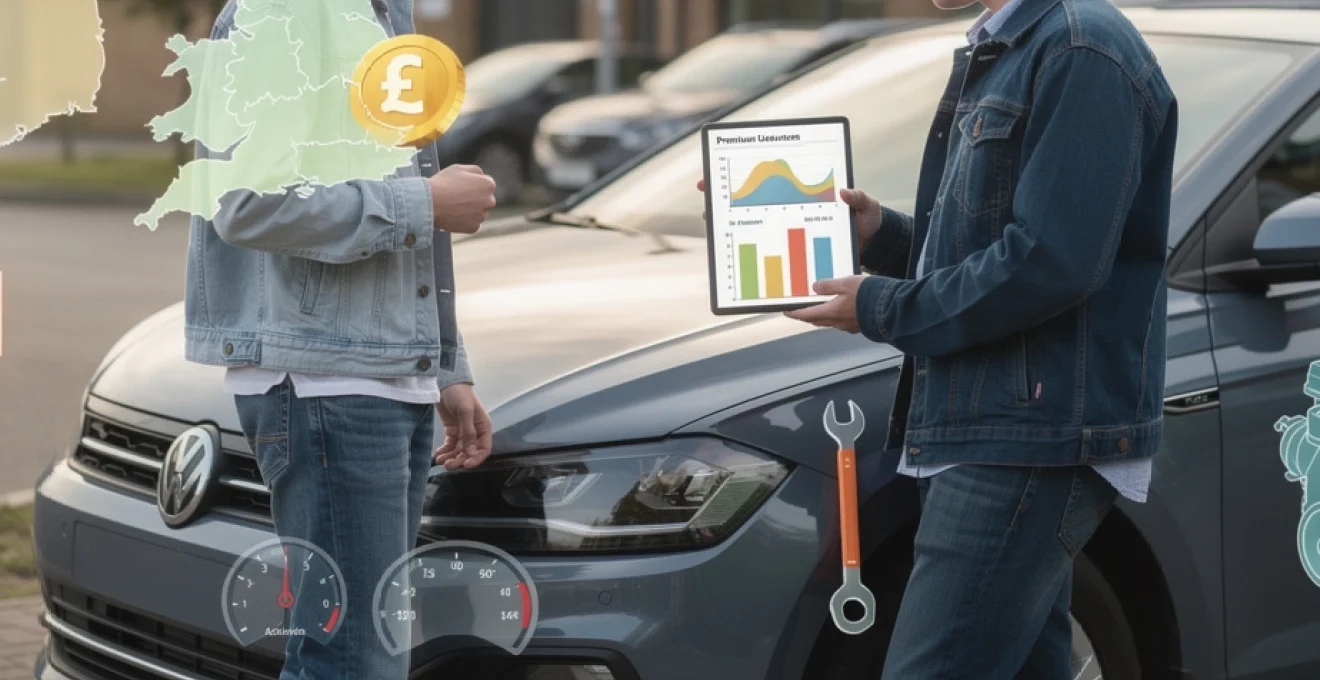
Purchasing a first car represents a significant milestone for any 17-year-old, yet the excitement of newfound freedom often meets the harsh reality of insurance costs. The Volkswagen Polo has established itself as one of the most popular choices for young drivers, combining reliability, safety, and practicality in an attractive package. However, securing affordable insurance coverage for teenage drivers presents unique challenges that require careful consideration and strategic planning.
Insurance premiums for 17-year-old Polo drivers can vary dramatically based on numerous factors, from geographic location to specific model variants. Understanding these variables becomes crucial for families seeking to balance financial responsibility with their teenager’s desire for independence. The Polo’s reputation as a sensible first car doesn’t automatically guarantee low insurance costs, as insurers assess risk based on driver demographics, vehicle specifications, and statistical data.
Young drivers face inherently higher premiums due to their lack of driving experience and statistically higher accident rates. Despite the Polo’s excellent safety credentials and modest performance characteristics, insurance companies view any 17-year-old driver as a significant risk. This reality requires prospective young Polo owners to explore various strategies for reducing premiums while maintaining adequate coverage levels.
Volkswagen polo insurance premiums for 17-Year-Old drivers
The cost of insuring a Volkswagen Polo for a 17-year-old driver varies significantly across the UK market, with annual premiums typically ranging from £1,800 to £2,600. These figures represent comprehensive coverage, which paradoxically often costs less than third-party insurance for young drivers. Insurance companies have observed that inexperienced drivers who opt for minimal coverage tend to file more frequent claims, driving up the cost of basic policies.
Average annual costs across major UK insurers
Major insurance providers offer varying rates for teenage Polo drivers, with some specialising in young driver policies. Admiral typically quotes between £1,900 and £2,400 annually, while Direct Line ranges from £2,100 to £2,800. Specialist young driver insurers like Marmalade or GoSkippy often provide more competitive rates, averaging £1,700 to £2,200. These variations reflect different risk assessment methodologies and target market strategies.
Black box insurance providers frequently offer the most attractive initial premiums, with companies like By Miles or Ingenie quoting as low as £1,500 annually. However, these policies require ongoing monitoring of driving behaviour and may impose restrictions that don’t suit every teenage driver’s lifestyle. The potential for premium increases based on poor driving scores adds an element of uncertainty to these policies.
Third party vs comprehensive coverage price differentials
Counterintuitively, comprehensive insurance often proves cheaper than third-party coverage for 17-year-old Polo drivers. Third-party policies typically cost between £2,000 and £3,200 annually, while comprehensive coverage ranges from £1,800 to £2,600. This pricing anomaly results from claims patterns, where younger drivers with basic coverage historically submit more expensive claims.
Comprehensive policies provide superior value beyond mere cost considerations. They include protection against theft, vandalism, and accidental damage, which proves particularly valuable for inexperienced drivers. Personal accident cover and courtesy car provisions further enhance the policy’s practical benefits during the vulnerable early driving years.
Regional premium variations: london vs rural scotland pricing
Geographic location dramatically impacts Polo insurance premiums for teenage drivers. London postcodes typically command the highest rates, with annual premiums reaching £3,500 or more due to elevated theft rates, traffic congestion, and accident frequency. Areas like Tower Hamlets or Newham consistently rank among the most expensive locations for young driver insurance.
Conversely, rural Scottish locations offer significantly lower premiums, often 40-50% less than London rates. Highland postcodes frequently see annual costs below £1,500, reflecting lower crime rates and reduced traffic density. However, even within regions, specific postcodes can vary dramatically, with some London suburbs offering rates closer to national averages.
Monthly payment plans vs annual premium discounts
Payment frequency significantly affects total insurance costs for young Polo drivers. Annual payment typically offers
the largest savings, with discounts of £50–£150 a year compared with paying in instalments. When insurers offer monthly payment plans, they usually add interest and administration fees, pushing the effective APR into double digits. For a 17-year-old insuring a Volkswagen Polo at £2,200 a year, paying monthly could add £150–£250 to the total cost.
Spreading the cost can still make sense if cash flow is tight, but it’s important to understand you are effectively taking out credit. Some providers carry out a soft credit check when setting up instalments, and missed payments can result in policy cancellation. If parents or guardians can afford it, one common tactic is to pay annually up front and have the young driver repay them monthly, avoiding finance charges while still making the cost manageable.
Risk assessment factors affecting young driver premiums
Statistical accident rates for polo models among teenage drivers
Insurers do not price Volkswagen Polo insurance for 17-year-olds based on guesswork; they rely heavily on accident statistics. National data shows that around 1 in 5 new drivers is involved in a collision within the first 12 months of passing their test, and Polos are one of the most common first cars in these statistics. Because so many young drivers choose superminis like the Polo, insurers have a large pool of claims data specifically for this model.
Interestingly, Polo accident rates for teenagers are not dramatically worse than for similar cars such as the Ford Fiesta or Vauxhall Corsa. Where the difference emerges is in the severity and cost of those incidents. Polos tend to perform well in crash tests, which reduces bodily injury claims, but repair costs can be higher than cheaper city cars, pushing up average claim values. As a result, a 17-year-old in a Polo may face similar claim frequency but slightly higher claim costs than a driver in a basic city car, and premiums are adjusted accordingly.
Insurance group classifications for polo variants
Every Polo sits in a specific UK insurance group from 1 to 50, with lower numbers attracting cheaper premiums. Entry-level Volkswagen Polo models such as the 1.0 MPI 80PS Life 5d fall into groups 3–4, while sportier trims like the Polo GTI can be placed as high as group 27–30. For a 17-year-old, choosing a Polo in group 3–5 can easily shave hundreds of pounds off the annual premium compared with a group 12 or above variant.
The difference between adjacent groups might look small on paper, but for young drivers the impact is magnified. For example, a basic 1.0 MPI 80PS SE 5d in group 3 might attract quotes around £1,900–£2,300, whereas a 1.0 TSI 110PS R-Line 5d DSG in group 12 could push premiums well beyond £2,800. Put simply, the more powerful and better-equipped the Volkswagen Polo, the higher the group and the more expensive the insurance for a 17-year-old driver.
Postcode risk analysis and crime statistics impact
Your address is one of the strongest rating factors for Volkswagen Polo insurance, especially for 17-year-olds. Insurers analyse local accident records, claim volumes and vehicle crime statistics at postcode level. A Polo parked overnight on a quiet driveway in rural Cumbria is seen as a very different risk to the same car left on-street in inner London. That’s why we often see premium differences of £800–£1,000 a year between the most and least risky areas.
Areas with higher incidences of theft-from-vehicle, vandalism and uninsured driving can drive premiums up, even if you personally have never claimed. Think of it as being graded as part of a class: even if you study hard, your overall score is influenced by how everyone else performs. If possible, parking a Polo in a locked garage or on a private drive can partially offset a high-risk postcode, signalling to insurers that the car is less exposed to opportunistic crime.
Driving experience and licence duration calculations
For a 17-year-old, the difference between having a full licence for three months versus one year can be surprisingly significant. Many insurers tier their pricing based on licence duration in increments, such as less than one year, 1–2 years and 2–3 years. As you move into the next tier without claims or penalty points, the perceived risk drops and your Volkswagen Polo insurance premium is recalculated downwards at renewal.
Insurers also look at any supervised driving recorded during the learner phase. Some telematics policies allow learner data to carry over, rewarding careful practice with lower starting premiums once the test is passed. This is one reason why clocking meaningful, varied mileage under supervision before test day can be financially beneficial. Over time, a clean driving record works like building up a credit score: the longer you go without negative events, the more trust—and lower prices—you earn.
Volkswagen polo model-specific insurance considerations
Security features: immobiliser and alarm system discounts
Factory-fitted security has a direct impact on Volkswagen Polo insurance for 17-year-olds. Most modern Polos come with a Thatcham-approved electronic immobiliser as standard, and many mid-range trims add an alarm system and deadlocks. These features reduce theft risk, allowing insurers to apply small but meaningful discounts, particularly in higher-crime postcodes.
When you obtain quotes, it’s vital to declare all standard security equipment accurately. Some comparison sites pre-populate these details, but double-checking your exact trim level and optional extras can avoid missed savings. Additional security, such as steering wheel locks or tracking devices, rarely transforms premiums on their own, but they contribute to an overall risk profile that insurers view more favourably—especially if the Polo is relatively new or parked in a vulnerable location.
Repair costs and parts availability for common polo generations
Repair costs are a key part of how insurers price Volkswagen Polo insurance. Newer models (particularly from the 2017-onwards generation) benefit from improved safety and crash structures but can be more complex and expensive to repair due to advanced electronics and sensors. Front and rear bumpers may house parking sensors, radar units or cameras, all of which increase the average cost of a claim after a seemingly minor collision.
Older Polos, by contrast, may have cheaper individual parts but can suffer from age-related issues that turn a straightforward repair into a bigger job. The good news is that the Polo is a very common car, so parts availability is generally strong, including aftermarket and pattern components, which helps keep body shop costs competitive. For insurers, this abundance of parts and repair expertise is a positive factor, often making a Polo cheaper to fix than more niche models and helping to moderate premiums for young drivers.
Engine size impact: 1.0 TSI vs 1.4 TDI premium differences
Engine choice plays a major role in 17-year-old Volkswagen Polo insurance pricing. Petrol 1.0-litre engines, especially the naturally aspirated MPI versions with 65–80PS, sit in lower insurance groups and are viewed as more suitable for new drivers. Turbocharged 1.0 TSI engines with 95PS or 110PS offer stronger performance and improved motorway usability, but that additional power and higher purchase price nudge them into higher groups and push premiums up accordingly.
Diesel variants such as the 1.4 TDI often fall into mid-to-high insurance groups due to higher torque, stronger performance at low revs and historically higher annual mileages. For a 17-year-old, the fuel savings of a diesel Polo almost never outweigh the extra insurance cost. As a rule of thumb, if you are trying to minimise insurance for a teenage driver, a modest 1.0 MPI or low-output 1.0 TSI is usually the sweet spot between usability and affordability.
Premium reduction strategies for teen volkswagen polo owners
So how can a 17-year-old actually bring their Volkswagen Polo insurance quote down to something realistic? The starting point is choosing the right car: a lower-powered, lower-group Polo in a sensible trim is almost always cheaper to insure than a sporty R-Line or GTI-style variant. Avoiding modifications—especially alloy wheel upgrades, suspension changes and aftermarket performance parts—is essential, as even cosmetic tweaks can increase premiums or limit insurer choice.
Beyond vehicle choice, policy configuration matters. Selecting a higher voluntary excess, such as £350–£500 instead of £150, usually reduces the annual premium, although you must ensure you could afford that amount in the event of a claim. Adding an experienced parent as a named driver (without falling into illegal fronting, where the parent is falsely declared as the main driver) can also lower costs, as the risk is spread across more mature motorists. Additionally, carefully estimating annual mileage—rather than overestimating “just in case”—prevents you paying for unused cover.
Telematics and black box insurance options
Telematics or black box policies are one of the most powerful tools for cutting Volkswagen Polo insurance for 17-year-olds. By fitting a small device or using a smartphone app, insurers can monitor driving behaviour in real time, tracking speed, acceleration, braking and time of day. Safe habits—such as smooth braking, avoiding late-night driving and staying within speed limits—are rewarded with lower renewal premiums and sometimes mid-term discounts or cashback.
Of course, black box insurance is not right for everyone. If you regularly drive late at night, often carry friends or do lots of motorway mileage, some scoring systems may penalise you, limiting potential savings. However, for many new Polo drivers, telematics acts like a digital driving instructor sitting beside you, gently nudging you towards safer habits and giving insurers hard evidence that you are lower risk than the average 17-year-old. For families who are serious about both safety and cost control, a telematics policy is well worth considering for at least the first one or two years on the road.
Legal requirements and policy coverage essentials
Whatever policy you choose, the legal minimum for driving a Volkswagen Polo in the UK is third party car insurance. This covers damage or injury you cause to other people and their property but does not protect your own car. As we’ve seen, third party-only cover is rarely the cheapest or most sensible option for 17-year-olds, but it sets the baseline for what must be in place before you drive alone on public roads.
Most young Polo drivers will be better protected with a fully comprehensive policy, which covers third party liabilities plus damage, fire and theft affecting your own vehicle. When comparing policies, look beyond headline price and check key features: do you get a courtesy car after an accident? Is windscreen cover included? Is driving other cars allowed (usually not for 17-year-olds)? Understanding these details ensures you are not left exposed after an incident. Think of your policy as a safety net—skimping on cover might save a little today but can be far more costly if something goes wrong tomorrow.