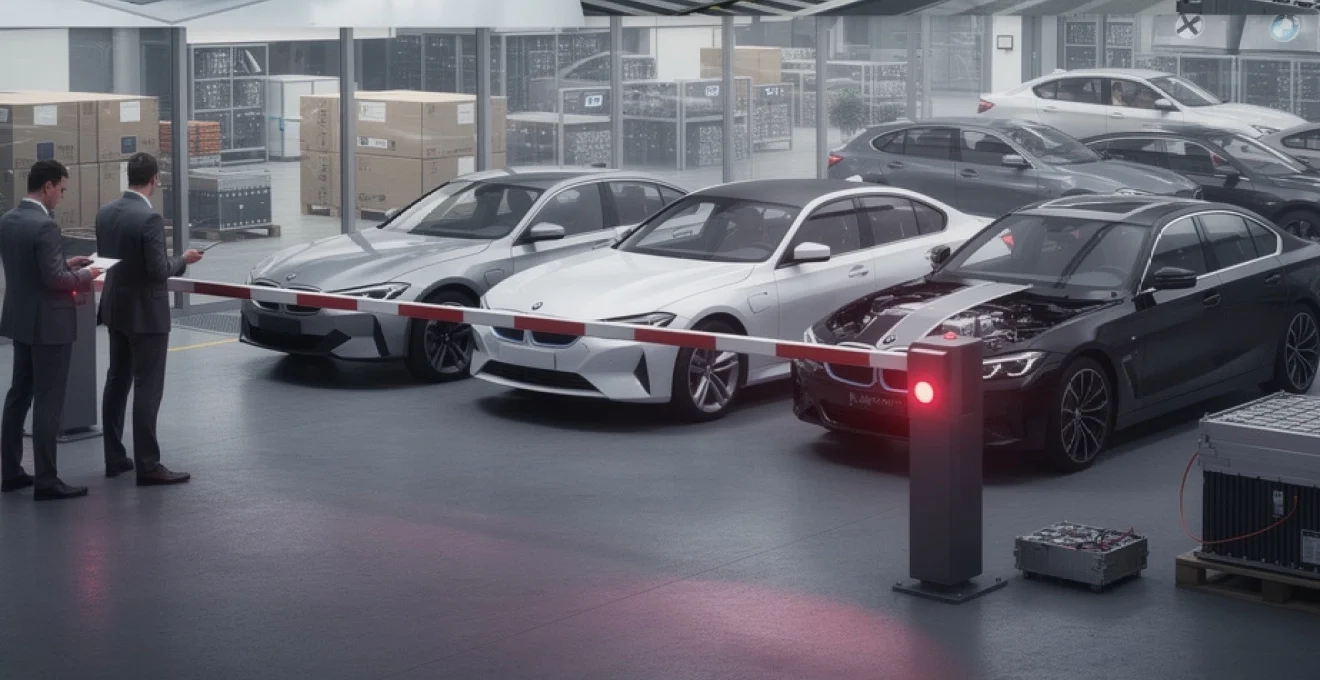
The automotive industry faced unprecedented disruption in 2024 when BMW Group implemented a comprehensive delivery suspension affecting over 1.5 million vehicles globally. This massive halt, primarily triggered by integrated braking system defects, sent shockwaves through dealership networks and left thousands of customers in limbo. The crisis extended beyond simple production delays, revealing deeper systemic issues within BMW’s supply chain management and quality control processes. From electric vehicle production lines to traditional combustion engine models, the ripple effects demonstrated the interconnected nature of modern automotive manufacturing and the catastrophic impact when critical safety components fail industry standards.
BMW production suspension timeline and affected model ranges
The delivery suspension began manifesting in August 2024, initially appearing as isolated incidents reported by frustrated customers on automotive forums. What started as whispered concerns among BMW enthusiasts quickly escalated into a global crisis affecting nearly every major model line. The integrated braking system recall, designated as 24V-104, became the primary catalyst for widespread production halts across BMW’s international manufacturing network.
i4 electric sedan manufacturing halt at munich plant
BMW’s flagship Munich facility, traditionally the heart of the company’s electric vehicle production, experienced significant disruptions to i4 sedan manufacturing. The plant’s assembly lines, which normally produce approximately 340,000 vehicles annually, faced unprecedented challenges as quality control teams identified faulty braking components in newly manufactured units. Production managers implemented immediate containment protocols, effectively freezing deliveries of completed vehicles pending comprehensive safety inspections.
The i4’s sophisticated regenerative braking system, integrated with the problematic components, required extensive validation testing before vehicles could receive clearance for customer delivery. This technical complexity meant that even vehicles passing initial quality checks faced additional scrutiny, creating bottlenecks throughout the production pipeline. Munich plant workers reported overtime shifts dedicated exclusively to retrofitting affected vehicles with replacement braking modules.
Ix SUV assembly line disruptions in dingolfing facility
Dingolfing’s advanced manufacturing facility, responsible for BMW’s premium iX electric SUV production, encountered similar challenges with the integrated braking system defect. The facility’s highly automated assembly processes, designed for efficiency and precision, suddenly became liability sources as quality control systems flagged potential safety issues. Manufacturing engineers worked around the clock to implement temporary fixes while awaiting definitive solutions from component suppliers.
The iX model’s complex electronic architecture, featuring multiple redundant safety systems, complicated the retrofit process significantly. Each affected vehicle required individual diagnostic procedures to ensure proper integration between the new braking components and existing electronic control modules. This meticulous approach, while necessary for safety compliance, extended production timelines considerably and contributed to growing customer frustration.
3 series and 4 series petrol engine delivery delays
Traditional combustion engine models within BMW’s core 3 Series and 4 Series ranges experienced equally severe delivery disruptions. Despite utilising different powertrains compared to electric variants, these vehicles shared common braking system components that triggered the global recall. Dealerships across Europe and North America reported unprecedented inventory shortages as completed vehicles remained quarantined pending safety modifications.
The delivery delays particularly impacted BMW’s crucial September registration period in the United Kingdom, historically one of the company’s strongest sales months. Customers with firm delivery commitments faced indefinite postponements, with many dealers offering deposit refunds rather than concrete revised timelines. This situation created significant revenue implications for both BMW Group and its extensive dealer network worldwide.
M performance division production schedule impact
BMW’s prestigious M Performance division suffered disproportionate impacts from the delivery suspension, given the specialised nature of their high-performance vehicles. Models like the M3, M4, and various M-badged SUVs required additional validation procedures due to their enhanced braking requirements and performance-oriented calibrations. The division’s limited production volumes made each delayed vehicle particularly significant for both revenue and brand reputation.
M Performance vehicles typically undergo extensive quality assurance protocols before delivery, but the integrated braking system recall added several weeks to standard procedures. Customers awaiting these premium models, often priced above £80,000, expressed particular frustration given the significant financial commitments involved. BMW’s M division implemented priority scheduling for affected vehicles, but supply chain constraints limited their ability to accelerate resolution timelines.
Supply chain disruptions behind BMW’s manufacturing crisis
While the integrated braking system defect was the visible trigger for BMW’s 2024 delivery halt, the underlying story is rooted in a fragile and highly complex automotive supply chain. Modern BMW models combine combustion engines, high-voltage batteries, and advanced driver assistance systems into tightly integrated platforms. When even one upstream supplier fails to meet specification, the disruption can cascade through production lines in Munich, Dingolfing, Spartanburg, Shenyang, and beyond. In 2024, BMW found itself managing not a single issue, but a convergence of semiconductor shortages, battery cell constraints, and tier‑one supplier bottlenecks.
For customers waiting on new BMW deliveries, this convergence meant that the official explanation often sounded simpler than reality. A “brake issue” might actually mask several dependencies: a missing ECU, delayed sensors, or software that could not be certified because key hardware was unavailable in stable quantities. In practice, BMW had to slow or stop manufacturing not just to correct a safety defect, but to avoid building incomplete cars it could not ship or legally register. The result was a production slowdown that felt sudden, but had been building in the background for months.
Semiconductor shortage effects on ADAS systems integration
Advanced driver assistance systems (ADAS) have become central to BMW’s brand positioning, from semi‑autonomous motorway driving to automated parking and emergency braking. These features depend on a dense ecosystem of semiconductors powering radar modules, cameras, lidar units, and high‑performance central computers. Although the most acute phase of the global chip shortage appeared to ease after 2022, certain automotive‑grade chips remained in critically short supply through 2024. BMW’s ADAS integration teams reported particular challenges sourcing microcontrollers and power management ICs certified for functional safety under ISO 26262.
When these chips are missing, BMW cannot simply “ship the car without them” as they might have done a decade ago with non‑essential options. Many ADAS functions are now hard‑linked to core safety and homologation requirements. A 5 Series or X5 without a fully functional integrated braking system or properly calibrated forward‑collision mitigation cannot pass regulatory checks in key markets such as the EU, US, or China. In some factories, BMW resorted to building partially completed vehicles and storing them in large holding areas, awaiting final installation and software flashing once semiconductor stock arrived.
From a customer perspective, this meant delivery dates that slipped repeatedly with little clear explanation. A car might be “built” according to the tracking portal, yet still be missing a critical ADAS control unit. Just as a missing cog can immobilise a mechanical watch, a single absent microchip could immobilise an entire vehicle fleet. Dealers reported that even when chips became available, BMW prioritised high‑margin models and markets, further complicating expectations for entry‑level or fleet customers.
Lithium battery cell supply constraints from CATL partners
BMW’s electric portfolio – including the i4, iX, i5, and upcoming NEUE KLASSE models – depends heavily on lithium‑ion battery cells sourced from partners such as CATL and other Asian suppliers. In 2024, global demand for high‑energy‑density battery cells continued to climb, driven not only by automotive manufacturers but also by stationary storage and consumer electronics. For BMW, this created a delicate balancing act between securing enough cells for its premium EVs and maintaining cost and margin targets under pressure.
Any disruption in this battery supply chain, whether due to raw material price spikes, shipping delays, or quality deviations at the cell plant, had immediate consequences for BMW production. Because packs are engineered to tight tolerances, switching to a different cell format or chemistry is not a quick fix; it is more like redesigning the foundation of a building than swapping out windows. In certain months of 2024, BMW reportedly prioritised high‑spec configurations and profitable regions, leaving some lower‑spec EV variants on extended back order.
For customers awaiting electric BMW deliveries, this translated into opaque lead times and configuration restrictions. Dealers in some markets advised buyers to avoid particular battery or trim combinations that were known to be constrained. If you were hoping for a specific long‑range variant with a particular wheel and tyre package, you might have been asked to compromise to receive your car within a reasonable timeframe. This dynamic shows how closely battery logistics are tied to the broader story of BMW’s delivery challenges in 2024.
Continental AG component delivery bottlenecks
Beyond batteries and chips, BMW relies on tier‑one suppliers like Continental AG for critical systems including braking electronics, instrument panels, and driver assistance sensors. According to recall documents and supplier briefings, some of the integrated brake system anomalies traced back to production inconsistencies at the supplier level. When Continental or similar partners encounter production anomalies, BMW must react swiftly, often before all technical details are publicly available.
In 2024, this meant certain batches of components required additional inspection, rework, or outright replacement before they could be installed in new vehicles. Imagine assembling a complex jigsaw puzzle only to discover entire sections of pieces might be cut to slightly incorrect shapes; that is effectively what BMW’s plants faced with some safety‑critical parts. As a result, cars already in production queues had to be diverted to containment areas, adding storage and handling costs on top of delayed revenue recognition.
These bottlenecks also complicated warranty forecasting. BMW had to allocate a “high three‑digit million” euro amount in additional warranty provisions in Q3 2024 to cover potential recall and retrofit activities linked to IBS and related systems. From a risk management perspective, this was preferable to letting potentially non‑compliant parts slip through, but it underlined how dependent modern BMW production is on a small number of specialised suppliers operating at extremely high precision.
Bosch ECU module procurement challenges
Bosch remains one of BMW’s most important partners for engine control units (ECUs), power electronics, and various chassis controllers. In 2024, global demand for sophisticated ECUs capable of handling complex software stacks – from integrated braking logic to adaptive suspension and energy management – outpaced available production capacity in several Bosch facilities. Even minor disruptions, such as line maintenance or yield issues on advanced process nodes, could ripple into weeks of limited ECU supply for OEM customers.
BMW’s integrated brake system issue was not purely a hardware problem, but the availability of updated or redesigned ECUs became a bottleneck in implementing the fix. Where an older recall might have involved swapping a mechanical part, the IBS campaign frequently required new or reprogrammed control units able to interpret motor position sensor signals correctly. Without sufficient ECU stock from Bosch and other partners, BMW could not complete the retrofit at scale, prolonging stop‑sale orders and pushing back delivery dates.
For affected owners and prospective buyers, this meant that even once BMW announced a technical remedy, real‑world scheduling at the dealer level lagged behind. Workshops needed not only trained technicians and appointment slots, but also the physical ECU modules, wiring harnesses, and calibration tools to complete the repair. This is one reason why forums were full of reports of “no ETA” or “awaiting parts” even months after the initial recall expansion was filed with regulators.
Quality control issues and safety recall implications
BMW’s IBS‑related delivery halt highlighted how intertwined quality control, regulatory compliance, and brand reputation have become in the premium automotive segment. A decade ago, a limited mechanical recall might have been managed quietly through service bulletins and dealer campaigns. Today, with vehicles acting as rolling computers governed by software, sensors, and networked ECUs, even a narrowly defined defect can trigger a global stop‑sale and full safety recall classification.
The 24V‑104 recall, expanded in August 2024 to cover more than 1.5 million vehicles worldwide, illustrated this shift. Regulators in the US (NHTSA), UK (DVSA), and EU required BMW to demonstrate not only that integrated braking performance met baseline safety thresholds, but also that failures would be detected, logged, and communicated to drivers through appropriate warnings. In parallel, BMW had to coordinate with suppliers, update test procedures, and ensure that field fixes could be applied consistently across multiple platforms ranging from Minis to Rolls‑Royce Spectres.
BMW ConnectedDrive software certification delays
Beyond the hardware fault itself, BMW’s ConnectedDrive ecosystem played a key role in managing – and, at times, complicating – the recall response. Many modern BMWs rely on over‑the‑air (OTA) updates to deploy software patches, adjust control strategies, or refine diagnostic thresholds. To modify how the integrated braking system is monitored and how warnings appear in the instrument cluster, BMW had to update software stacks across infotainment, chassis, and body domains. Each of these updates required certification to meet cybersecurity, privacy, and functional safety standards in multiple jurisdictions.
These software certification processes are not instantaneous. Before an OTA campaign can be launched at scale, BMW must validate that new code works correctly across numerous hardware variants, model years, and regional configurations. It is a bit like updating an operating system that runs on hundreds of different laptop models, each with its own drivers and peripherals. In 2024, this meant additional delays between identifying the ideal braking system mitigation and actually rolling it out to vehicles in customer hands.
For owners, this sometimes translated into mixed messaging: a vehicle could be “safe to drive” according to BMW, yet still subject to a future software update or hardware check. Dealers often found themselves explaining that connected services would ultimately help monitor and manage the risk, even as some customers remained sceptical about relying on software to compensate for a supplier‑level manufacturing flaw. Nevertheless, ConnectedDrive was critical for pushing updated diagnostics, logging real‑world data, and prioritising vehicles for workshop visits.
Airbag system compliance with euro NCAP standards
The IBS crisis unfolded against a backdrop of tightening safety expectations, particularly in Europe under Euro NCAP protocols. Although the core 2024 BMW issue centred on braking, the company had recently navigated separate scrutiny over instrument panel specifications affecting passenger airbag performance in certain models. These instrument panel cases, documented in UK and EU safety notice databases, underscored how sensitive regulators are to any component that could alter airbag deployment geometry or retention.
When regulators view a brand as being under enhanced monitoring, even unrelated systems may receive closer inspection. In BMW’s case, ongoing dialogue about airbag performance and passenger protection meant that any new safety‑critical finding – like the integrated braking system irregularity – had to be handled with particular transparency and rigour. BMW could not risk being seen as slow or evasive, especially after owners discovered some issues through government recall portals before receiving direct communication.
In practical terms, this led to more conservative decisions on stop‑sales and recall classification. Where an earlier generation defect might have triggered a “service campaign,” IBS issues were consistently flagged as full safety recalls. For customers, this distinction matters: a safety recall is more visible, more disruptive, but also provides clearer legal protections and obligations. It also feeds into crash‑test ratings and Euro NCAP assessments, which increasingly factor in active safety systems and structural integrity under real‑world conditions.
Electric powertrain validation testing requirements
BMW’s commitment to electrification brought additional layers of validation complexity that intersected with the 2024 delivery halt. In an electric BMW, the braking experience is a finely tuned blend of mechanical friction braking and regenerative deceleration via the electric motor. Any change to the integrated brake system can therefore affect not only stopping distances but also energy recovery, pedal feel, and the performance of features like one‑pedal driving.
When defects were found in the integrated braking hardware or its control logic, BMW’s engineers had to repeat extensive validation tests on both test benches and proving grounds. They needed to ensure that updated hardware modules and software calibrations restored not just basic braking safety, but also the driving refinement customers expect from the brand. Think of it as rebalancing a symphony: adjusting one instrument – the brake booster – requires retuning the entire orchestra of powertrain, stability control, and driver assistance systems.
This validation work extended the timeline for lifting stop‑sale orders on EVs like the i4, iX, and i5. BMW could not simply copy calibrations from combustion models, because EV braking energy management is fundamentally different. Customers noticed this in the form of delayed handovers and, in some rare field cases, onboard messages warning of parking brake or driver assistance malfunctions before the recall fix was applied. These warnings were often precautionary, but they reinforced the perception that electric powertrains bring new failure modes that must be carefully managed.
WLTP emission testing protocol compliance failures
Although the 2024 BMW delivery halt was not primarily driven by emissions issues, WLTP (Worldwide Harmonised Light Vehicles Test Procedure) compliance remained a parallel pressure point. For plug‑in hybrids and high‑output petrol models, any change in brake or powertrain control software can, in theory, influence CO2 emissions and fuel consumption figures. If a new integrated brake system calibration alters coasting behaviour or energy recuperation thresholds, certified WLTP values might need to be re‑validated.
Re‑testing under WLTP is resource‑intensive, requiring laboratory equipment, specific driving cycles, and regulatory oversight. BMW, like other manufacturers, must decide whether incremental software updates require formal re‑homologation or can be classified as neutral to emissions. In 2024, with regulators on high alert following previous industry‑wide scandals, BMW erred on the side of caution, subjecting some variants to additional checks before releasing updated software and hardware fixes into full series production.
For the end customer, these WLTP‑related processes remained largely invisible, overshadowed by the more immediate concern of “When will my car be delivered?” Yet they contributed to the overall timeframe needed to stabilise production. Fleet buyers and leasing companies, in particular, watched WLTP values closely, as even small changes can affect benefit‑in‑kind taxation, total cost of ownership calculations, and corporate sustainability reporting.
Financial impact assessment on BMW group revenue projections
The combined effect of stop‑sale orders, recall costs, and production slowdowns had a measurable impact on BMW Group’s 2024 financial performance. In its annual reporting, BMW acknowledged that the integrated brake system issue and associated delivery stops would reduce global sales volumes in the second half of the year. While exact figures varied by quarter and region, analysts estimated that around 320,000 vehicles sat in manufacturer or dealer stock awaiting remedial work, with a further 1.2 million already in customer hands requiring recall appointments.
These disruptions compressed BMW’s automotive EBIT margin to around 6.3% in 2024, below its long‑term strategic target range of 8–10% but in line with a revised guidance band of 6–7% announced in September of that year. Additional warranty provisions running into a high three‑digit million euro amount had to be recognised, directly impacting quarterly earnings. For a capital‑intensive business like automotive manufacturing, where each day of delayed deliveries ties up significant working capital, such margin compression can quickly influence investment capacity and shareholder sentiment.
Nonetheless, BMW emphasised its continued capacity to generate robust free cash flow, reporting nearly €5 billion in automotive free cash flow despite peak‑level investments in electrification and digitalisation. Management communicated a plan to reduce both capital expenditure and R&D intensity from 2025 onwards, as major NEUE KLASSE investments transition from development to execution. In other words, BMW positioned 2024 as a financially painful but strategically necessary year: dealing with legacy quality and supply chain issues while laying the groundwork for a more software‑driven, electric future.
From an investor perspective, the key question was whether the IBS recall and delivery halt represented a one‑off shock or a symptom of deeper structural weaknesses. The answer likely lies somewhere in the middle. On one hand, supplier‑driven defects and complex recalls have always been part of automotive risk. On the other, the scale and cost of the 2024 disruptions underscored how much more vulnerable premium brands have become as they stack safety, connectivity, and electrification technologies on a shared set of critical components.
Competitive market consequences and Mercedes-Benz advantage
Every large‑scale production disruption reshapes the competitive landscape, and BMW’s 2024 delivery halt was no exception. As BMW paused deliveries on many X models, 5 and 7 Series variants, and several Minis, rival brands – particularly Mercedes‑Benz and Audi – found themselves with a short‑term window to capture demand from impatient customers. Dealers reported that some BMW order cancellations translated directly into E‑Class, GLE, or EQE sales, especially where fleet contracts or lease terms were flexible.
Mercedes‑Benz, which had its own recall campaigns to manage, nonetheless appeared to avoid a comparably broad stop‑sale on core models in 2024. This allowed Mercedes to emphasise relative stability in its supply chain and quality control processes, even if the reality behind the scenes was more nuanced. In markets like the UK and Germany, where company car drivers and premium private buyers often cross‑shop between BMW and Mercedes, delivery certainty became almost as important as list price or equipment levels.
However, the competitive impact is not purely about short‑term market share. Brand perception in the premium segment evolves slowly, shaped by years of ownership experiences, reliability reports, and media coverage. While BMW’s integrated brake system recall certainly dented its reputation among some customers, the brand also benefited from transparent regulatory filings and a strong residual value base that reassured many existing owners. If BMW can demonstrate that the lessons from 2024 translate into more robust supplier management and better digital diagnostics, the long‑term damage may be limited.
For buyers weighing BMW versus Mercedes‑Benz in the aftermath of the delivery halt, the decision increasingly comes down to which manufacturer can prove that complex software‑defined vehicles remain dependable over time. Both brands are racing to roll out new electric architectures and advanced driver assistance systems. As we move further into the second half of the decade, a single high‑profile recall is unlikely to define the entire competitive narrative – but it does remind customers to ask tougher questions about safety, support, and transparency before signing a new lease or finance agreement.
Customer compensation strategies and dealer network response
On the customer front, BMW and its dealer network had to walk a fine line between legal obligations, financial realities, and brand loyalty. Because many affected vehicles were technically considered “safe to drive” under interim guidance, BMW stopped short of offering blanket buybacks or extended warranties globally. Instead, responses varied by market, dealer, and individual circumstances, which partly explains why owner experiences reported on forums ranged from highly satisfactory to deeply frustrating.
Common dealer‑level measures included offering alternative BMW demonstrators or courtesy cars, extending existing lease terms at reduced rates until replacement vehicles could be delivered, and refunding deposits where buyers no longer wished to wait. In some cases, especially for high‑value M Performance models or early adopters of the i5 and i7, dealers negotiated goodwill gestures such as complimentary service packages, option upgrades, or modest discounts to retain the sale. If you were in a strong negotiating position – for example, with multiple competing offers on the table – you were more likely to secure favourable terms.
From BMW’s corporate perspective, the priority was to coordinate a consistent, legally sound framework while still allowing local flexibility. Internal guidance emphasised clear communication: informing customers that their cars would be subject to a safety recall, clarifying whether they could continue to drive them, and explaining the expected timeframe for repairs. Dealers were urged to avoid over‑promising on delivery dates and to be transparent when parts availability or workshop capacity limited how quickly recalls could be completed.
For existing owners, a few practical steps helped navigate the situation more effectively:
- Regularly checking official recall portals (such as NHTSA in the US or DVSA in the UK) using the vehicle’s VIN to confirm status and available remedies.
- Maintaining written records of all dealer communications, including any promises of loan cars, discounts, or service appointments linked to the recall.
- Discussing interim mobility options with insurers and employers where company cars or essential travel were involved.
Ultimately, BMW’s ability to recover from the 2024 delivery halt will depend as much on how individual customers feel treated as on the technical success of the recall itself. The episode reinforced a simple truth about modern premium car ownership: when vehicles are as complex and interconnected as smartphones on wheels, robust aftersales support and honest communication are no longer optional extras – they are central to the value proposition you buy when you choose a badge like BMW.